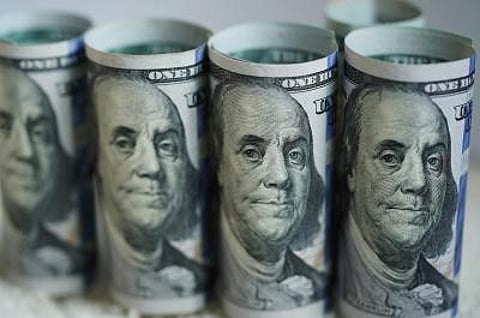

MUMBAI: In a week when the Reserve Bank of India struggled to defend the rupee—and on a day when the currency briefly flirted with the 92-per-dollar mark before closing at a record low of 91.88—surging gold prices helped shore up the country’s foreign exchange reserves. The reserves recorded their third-largest weekly increase on record in the week ended January 16, rising by $14.2 billion to $701.36 billion.
This is the fourth time that the foreign exchange reserves have crossed the $700-billion mark and they are now just shy of the record high of $704.85 billion reached in the week ended September 27, 2024. Since then, the reserves have crossed the $700-billion level twice, including in September 2025, but have not surpassed the earlier peak.
From a weekly addition point of view, the biggest weekly addition was on August 27, 2021 when the reserves added $16.663-billion to take the total to $633.558 billion, mainly due to an increase in the special drawing rights (SDRs), after the International Monetary Fund allocated 12.57 billion (around $17.86 billion) worth of SDRs to India on August 23, 2021.
The second biggest rally was for the week to March 7, 2025 when the reserves added $15.3 billion, taking the total stockpile to $654 billion, bolstered by the Reserve Bank’s $10-billion forex swap operations conducted in February to ease liquidity. At the time, it was the highest weekly gain recorded since.
The third largest was recorded for the week to January 16, 2026: when it added $14.17 billion take the total reserves to neat record of $701.36 billion, largely driven by a sharp increase in gold holdings, which rose by $4.62 billion due to surging global prices, and a $9.65 billion jump in foreign currency assets.
The fourth largest addition was on September 27, 2024, when it $12.5 billion, taking the overall forex stockpile to its all-time peak of $704.89 billion. The fifth biggest accretion was in the week to November 14, 2025 when it jumped by $5.54 billion driven by gold holdings.
At over $701.3 billion makes the country the fifth largest in terms of forex reserves and this can last for 11 months of imports.
In the previous week ending January 9, the reserves had stood at a low $687.19 billion.
Of the $14.19-billion weekly boost recorded for January 16, as much as $4.62 billion came from the value accretion to the gold reserves of over 810 tonne which touched $117.45 billion in the week, the Reserve Bank said Friday in its weekly statistical supplement.
It can be noted that the after the US invaded Venezuela on January 3 and took its president and his family captives, the precious metals were on fire. US president Donald Trump’s now backed down rhetoric that he would forcefully annex the icy Greenland and announced punitive 10% tariffs on exports from eight of the largest European countries from next month only added to the save-haven demand for gold and silver. These metals set new records today with gold crossing the $4975/oz mark and silver just spitting distance from touching the $100/oz mark reaching $99.2 earlier in the day on the CME.
The rest of the addition came from a spike in the foreign currency assets, which form the bulk of the reserves, that rose by $9.65 billion to $560.52 billion.
Foreign currency assets in dollar terms account for changes in asset values as well as shifts in major non-US currencies such as the euro, pound sterling, and yen held in the reserve basket.
However, special drawing rights dipped slightly by $35 million to $18.704 billion while the country’s reserve position with the IMF also declined by $73 million to $4.684 billion for the reporting week.
The RBI has been regularly intervening in the forex market to stem the rupee slide which has lost 1% this week and 2% this month on top of the near 5% loss in 2025. The central bank intervention is necessary to maintain orderly conditions and are aimed at limiting excessive volatility in the rupee and are not linked to defending any specific exchange rate level or band.
The world’s leading central banks hold 413 trillion in total reserves, led by China, as of the third quarter of 2025. China consistently leads with the largest reserves with over $3.64 trillion, followed by Japan ($1.324 trillion) Switzerland ($1.07 trillion), Russia ($734.1 billion) and India has the fifth largest hoarding of forex $7o1.36 billion.
The next five are Taiwan($597.43 billion), Saudi Arabia ($434.54 billion), Hong Kong ($421.4 billion), South Korea ($4,30 billion) and Brazil ($388.57 billion).
Central bank hold the forex reserves mostly in dollars and gold but do not invest in silver and these reserves are deployed to ensure currency stability, offer import cover providing a buffer to pay for essential imports during economic crises. In short, they act the a ‘war chest’ to absorb external shocks like sudden capital outflows or global financial crises.
