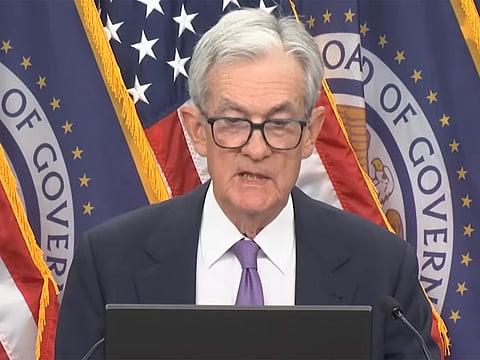

US and European markets moved cautiously today following the Federal Reserve’s decision to hold interest rates steady after a series of cuts in 2025, marking a deliberate pause in its easing cycle. The Fed signaled that while inflation remains somewhat above target and the labor market continues to show resilience, current conditions do not justify further reductions at this stage. Investors interpreted the decision as a reflection of confidence in the economy’s underlying strength, but also as a reminder that future policy moves will remain data-dependent, particularly on inflation and employment trends.
In the US, equities showed a mixed but generally stable pattern. The S&P 500 maintained levels near its recent highs, while the Nasdaq and Dow Jones Industrial Average displayed modest fluctuations. Technology and AI-linked sectors provided support to the market, partially offsetting the lack of immediate monetary stimulus. Fixed income markets reflected a cautious stance, with Treasury yields stabilizing near higher levels as investors adjusted expectations for future policy easing. Safe-haven assets, notably gold, experienced notable gains as investors sought protection against ongoing policy uncertainty and potential market volatility. Overall, the US market reaction balanced optimism over economic resilience with measured caution due to the absence of further rate cuts.
European markets, in contrast, demonstrated a more subdued response. Indices such as Germany’s DAX and France’s CAC 40 moved lower in early trading, reflecting a combination of sensitivity to US monetary policy and lingering regional concerns over growth and regulatory pressures. The UK’s FTSE 100 remained relatively flat, showing limited momentum. European investors appeared cautious amid a backdrop of slower growth expectations, valuation concerns in certain sectors, and uncertainty about the European Central Bank’s future policy trajectory. Divergent monetary policies between the US and Europe are influencing capital flows and investor sentiment, as markets adjust to the possibility of differing paths in interest rates and economic stimulus.
Currency and commodity markets also reflected the Fed’s pause. The US dollar found support against major currencies as expectations of a restrained pace of rate cuts bolstered demand, while the euro faced pressure from regional economic and policy concerns. Gold and other precious metals attracted investor interest as a defensive hedge, rising in response to both policy uncertainty and continued geopolitical and economic risks.
Market participants are now closely monitoring upcoming economic data, particularly US inflation readings and labor market reports, as these will provide crucial guidance for the Fed’s next steps. The balance between sustaining growth and containing inflation remains a central theme, and investors are weighing the implications of policy divergence between the US and Europe. Technology and growth-oriented sectors in the US could continue to lead market performance if economic resilience persists, while European exporters remain vulnerable to currency movements and global demand trends.
