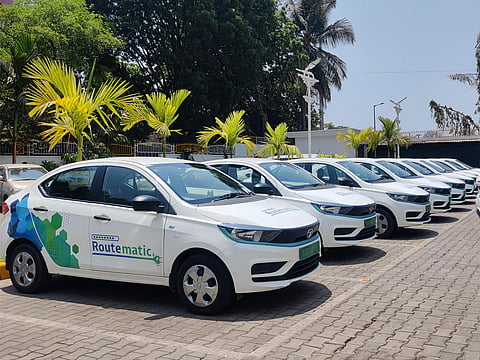

NEW DELHI: Electric vehicle (EV) sales surged across categories and reached a record high in May 2026. Data from the Federation of Automobile Dealers Associations (FADA) show EVs accounted for a record 11% of all vehicles retailed, with 271,682 units sold, a massive 45% year-on-year increase.
Electric two-wheelers led in volume at 1,70,733 units (+63% YoY), lifting penetration to 9.3% from 6.1%. Electric three-wheelers remain the most electrified segment, with 64.4% of all three-wheelers now electric. Electric passenger vehicles (PV) grew 81% Y-o-Y to 26,682 units (penetration 6.6% from 4.5%) on a widening model choice, while electric commercial vehicle volume more than doubled annually, though still nascent at 2.86%.
The sharp increase in demand for EVs comes in the backdrop of rising fuel prices, triggered by West Asia conflict, new options to choose from and eroding anxiety around charging infrastructure.
FADA President C S Vigneshwar said that sharp fuel-price hikes of the past month have brought day-to-day running costs into sharp focus for buyers — and increasingly, the low cost of ownership is tilting that everyday economic decision firmly towards electric. oil marketing companies in India increased petrol prices by 7.8% and diesel prices by 8.6% last month.
To sustain it, accessible financing, robust charging networks and predictable policy remain key, added Vigneshwar.
Puneet Gupta, Director, S&P Global Mobility stated that India crossed 4% battery electric vehicle (BEV) penetration last year and this is the inflection point for BEV across the world. “We expect BEV penetration to scale up as growing trust in EV technology, more BEV cars on the road, localisation of parts, growing charging infra, New OEMs, more EV models will help industry to grow,” added Gupta.
Tata Motors PV retained its leadership position with retail sales of 10,340 EVs, followed by Mahindra & Mahindra at 6,210 units and JSW MG Motor India at 4,984 units. In the e-2W segment, TVS Motor retained top spot with 42,459 units, followed by Bajaj Auto at 39,202 units and Ather Energy at 28,240 units.
Saket Mehra, Partner and Automotive and EV Industry Leader, Grant Thornton Bharat said that the EV sales figures from FADA reflect a decisive consumer shift, driven by rising fuel prices, wider model availability, and expanding charging infrastructure.
“Alongside EVs, we’re also seeing steady pickup in other alternative fuel technologies such as CNG, LNG, and hybrid vehicles, which are gaining traction in both passenger and commercial segments. Together, these shifts signal that India’s auto industry is not just diversifying fuel choices but structurally transforming. The record highs we saw in May mark an inflection point where electrification and alternative fuels are reshaping mobility in tandem,” Mehra told The New Indian Express.
