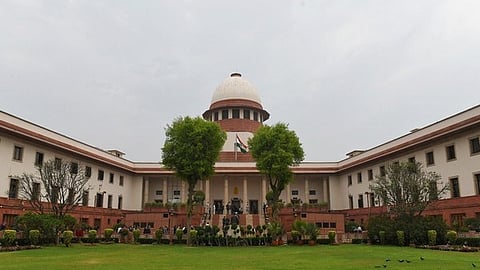

The Supreme Court has refused to interfere with an order of the Securities Appellate Tribunal (SAT) that had granted relief to former Biocon senior executive Shreehas P. Tambe in an insider trading case filed by the Securities and Exchange Board of India (SEBI), while clarifying that the tribunal's ruling will not be treated as a binding precedent.
A Bench of Justices Sanjay Karol and Nongmeikapam Kotiswar Singh disposed of SEBI's appeal against the SAT's July 26, 2022 order, observing that it was "not inclined to interfere" with the impugned judgment in the facts and circumstances of the case.
At the same time, the apex court clarified that the SAT judgment "shall not be treated as a binding precedent" and said that the larger question of law has been left open for consideration in an appropriate case.
The order effectively brings the litigation to a close without affirming the legal reasoning adopted by the appellate tribunal.
The case stems from a 2021 SEBI order against Tambe, then Senior Vice President at Biocon Ltd. The market regulator had held that he traded in the company's shares while in possession of unpublished price-sensitive information (UPSI) relating to Biocon's collaboration with Sandoz during December 2017 and January 2018.
SEBI had found that Tambe sold Biocon shares during the UPSI period, failed to make timely disclosures regarding the trades, and submitted a false declaration while seeking pre-clearance for the transactions. The regulator had barred him from the securities market for three months, restrained him from associating with listed companies during that period, and imposed a monetary penalty of ₹2 lakh.
Tambe challenged the SEBI order before the Securities Appellate Tribunal, which ruled in his favour in July 2022. SEBI subsequently approached the Supreme Court against the SAT decision.
With the dismissal of SEBI's appeal, the relief granted to Tambe by the SAT remains undisturbed. However, by expressly stating that the tribunal's ruling will not operate as a precedent and leaving the legal question open, the Supreme Court has ensured that the issues involved can be examined afresh in future cases.
