
The sharp escalation in the Iran-Israel conflict following the United States-Israel strike on Iran on February 28, 2026, has intensified geopolitical risks in West Asia and triggered immediate repercussions for global energy markets. Crude oil prices, which had already been firming up amid rising tensions, climbed from around $65 per barrel to nearly $72-73 per barrel over the past few days. With direct military engagement now reported and uncertainty around further escalation, volatility in oil, currency and equity markets is expected to remain elevated.
At the heart of the economic concern is the Strait of Hormuz, through which nearly 20% of global petroleum liquids and about a fifth of global LNG shipments transit. India, which consumes roughly 5.5 million barrels of crude oil per day and imports more than 80% of its requirement, is particularly exposed. Around 1.5-2 million barrels per day of India’s crude imports pass through this narrow corridor. In FY2025, nearly 50% of India’s crude oil imports and 54% of LNG imports were routed via Hormuz. Any disruption — or even the perception of risk — can inject a geopolitical premium into oil prices.
Prashant Vasisht, Senior Vice President and Co-Group Head, Corporate Ratings at ICRA, warned that “the escalating conflict in the Middle East and reported attacks on several oil producers are likely to exacerbate volatility in crude oil prices.” He noted that “as Iran and several Middle East energy producers straddle the Strait of Hormuz, any escalation in regional conflict could impede energy shipments through this corridor.” He further cautioned that “a prolonged and/or widening conflict involving multiple oil and gas producers and disruption at the Strait of Hormuz could adversely impact global crude oil and LNG supplies, potentially leading to a further rise in global energy prices.”
India sources a substantial portion of its crude from West Asia, including Saudi Arabia, Iraq, Kuwait and the United Arab Emirates. While refiners can diversify supplies to the United States, Africa or South America, global oil benchmarks determine pricing, meaning elevated crude prices would still translate into a higher import bill.
The macroeconomic transmission to India is immediate. Higher crude prices raise fuel and transportation costs, feeding into broader inflation. Manoranjan Sharma, Chief Economist at Informerics Ratings, said the conflict has “significantly affected global energy security and economic stability,” adding that for India “the immediate consequence has been rising inflationary pressure triggered by higher energy prices.” He noted that “elevated import costs are likely to widen the current account deficit and further strain the fiscal deficit through increased subsidy obligations.”
Aditi Nayar, Chief Economist at ICRA, underlined the uncertainty surrounding the situation, stating: “The situation in West Asia is unfolding and the extent that it prolongs and widens would have a bearing on India's macros, including things like the impact of fuel prices on inflation and the twin deficits, as well remittances.”
Financial markets have already shown signs of stress. In February, the S&P 500 and the Nasdaq Composite declined in the United States, while India’s Nifty 50 was down on a year-to-date basis. Nachiketa Sawrikar, Fund Manager at Artha Bharat Global Multiplier Fund, said that “a USA and Israel attack on Iran would likely trigger broad selling of risky assets across both the developed and emerging markets.” He added, “For India, the impact is typically magnified: higher crude oil prices widen the current account deficit, stoke domestic inflation, pressure the rupee, and could lead to FII outflows as global investors reduce risk exposure.”
Sectorally, the implications are mixed. Sustained high crude prices are expected to moderate marketing margins and profitability of oil marketing companies, especially if retail price pass-through is constrained. Energy-intensive industries such as aviation, logistics, chemicals and paints are likely to face margin compression. Automobiles, financials and FMCG companies may see pressure in the near term due to cost escalation and softer consumption. Conversely, upstream oil producers could benefit from higher realizations, and IT exporters may find some support from a stronger US dollar.
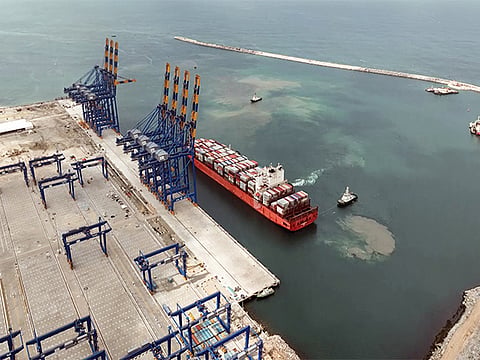
There are also strategic commercial interests in the region. Adani Group-owned Haifa Port Company confirmed in a statement that “all its employees are safe, and all port assets and infrastructure are fully secure and in operational condition.” The company added that it “continues to monitor the situation and is coordinating closely with the Ministry of Transport and Road Safety and operating as per their instructions,” and remains committed to “ensuring the safety of our people and the continuity of operations, maintaining stability for Israel’s supply chain and international trade.”
