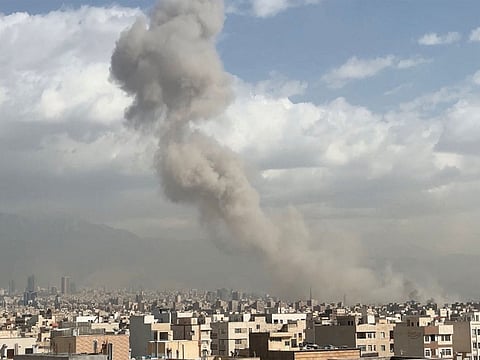

MUMBAI: While the Iran conflict has set crude on fire—rallying over 7% in a day to cross $75 a barrel--the war creates more logistic headaches for all countries which are dependent on Gulf oil, says economists and analysts.
According to Sehul Bhatt, a director with Crisil Intelligence, the crisis in the Middle East could increase pricing and procurement risks for crude oil and liquefied natural gas (LNG), posing substantial challenges for India, which has more than 85% and 50% import dependency, respectively, in these energy segments.
Given the critical role of energy across sectors, corporate India will be exposed to three major risks, according to him.
“While Iran supplies only 4.5–5% of global oil, the main concern is disruption at the Strait of Hormuz which is vital for almost half of India’s imports of both these commodities, thus increasing vulnerability. If disruptions persist, shipments may be rerouted via the Cape of Good Hope, lengthening transit times and increasing the cost along with rising freight and insurance premiums,” Bhatt said in a note Monday.
Crude prices have jumped above $75/barrel in the past two days. If geopolitical issues ease, we expect prices to average $65–70 in 2026, but prolonged conflict could push prices even higher, he said.
Also, the oil cartel Opec+ have paused output hikes for Q1 2026 but plans a modest increase of 0.2 million barrels a day from April, which could offer some relief. However, spare capacity outside Saudi Arabia and the UAE is limited, so the price impact will depend on actual oil flows through the Gulf. This concentration limits short-term supply flexibility.
“Sustained disruptions would keep crude prices elevated and tighten LNG availability underscoring the need for strategic planning to protect country’s energy security,” Bhatt added.
Nomura chief economist Sonal Varma on the other hand said nearly half the 85% oil imports are pass through the Strait of Hormuz.
“In FY25, Iraq, Saudi Arabia, the UAE and Kuwait cumulatively comprised close to 46% of the country’s annual crude oil imports, underlining the importance of this chokehold for our energy security,” she said, adding the country meets as much as 85% of oil needs from imports. In FY25 as much as 35% of cruse was shipped from Russia but that option is almost closed now.
“A regime change in Iran, however could lead to a dismantling of its sanctions, and India could benefit from the increase in global supply of crude oil as a consequence over time,” she added
According to RBI, a 10% increase in global crude prices leads to a 15 bps drop in GDP growth and 30 bps increase in inflation, but this is based on the old inflation series, while the new one has doubled the combined weightings of petrol and diesel to 4.8% from 2.3%, which should also raise the sensitivity of CPI inflation to oil price changes, if fully passed, Varma said.
On the external front, according to Varma, current account deficit is currently well balanced, and should average 0.9% of GDP in FY26 and 0.8% in FY27, which is low by historical standards but this is based on assumption crude averaging $65/barrel. Every 10% increase in crude prices typically widens the CAD by 0.4% of GDP.
But the country’s major external sector risk is not from its current account, but from the capital account, where a sharp drop in foreign investment flows has been leading to a large balance of payments deficit in FY26. A combination of a widening CAD and FII outflows due to global risk aversion could accentuate rupee weakness and this will put the rupee under more stress.