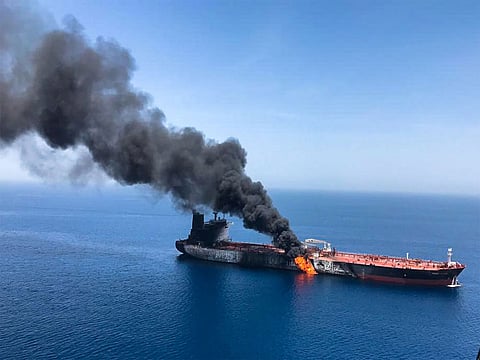

India has begun discussions with the US to secure marine insurance protection and possible logistical support for vessels transporting crude oil and other energy cargoes from the Middle East, as New Delhi seeks to safeguard its energy supply chain from the growing security risks in the Gulf region, Reuters reported on Thursday.
The move reflects mounting concern within the government that the escalating crisis in West Asia could disrupt one of the world’s most critical shipping routes and potentially threaten the steady flow of oil and gas supplies to major importing nations.
The report, quoting a government official familiar with the matter, said India is exploring options with Washington to ensure that tankers carrying energy cargoes to Indian ports continue to receive adequate insurance coverage and operational support despite the rising geopolitical risks in the region. These discussions are aimed at protecting Indian buyers from supply disruptions that could arise if commercial shipping companies become reluctant to sail through conflict-prone waters or if insurers withdraw coverage for vessels transiting the Gulf.
The urgency of these talks stems from the strategic importance of the Gulf’s maritime corridors, particularly the Strait of Hormuz, which serves as a vital gateway for global energy trade. A significant portion of the world’s crude oil and liquefied natural gas passes through this narrow waterway each day. For India, which depends heavily on imports to meet its energy needs, the stability of this shipping route is critical. The country sources a large share of its crude oil and liquefied petroleum gas from producers in West Asia, making any disruption to maritime logistics an immediate concern for policymakers.
The intensifying conflict in the region has already triggered volatility in shipping markets. Rising security threats and the possibility of attacks on commercial vessels have led to higher freight costs and sharply increased war-risk insurance premiums. In some cases, insurers have reportedly reduced or withdrawn coverage for ships operating in the region, raising the risk that energy shipments could slow or become more expensive. For importing countries such as India, these developments carry the risk of not only supply disruptions but also higher domestic fuel prices.
Against this backdrop, India’s engagement with the US is seen as part of a broader strategy to maintain the uninterrupted movement of energy cargoes through the Gulf. Washington has significant naval capabilities in the region and has historically played a central role in safeguarding maritime trade routes during periods of geopolitical tension. Securing marine cover or broader logistical support through coordination with the US could therefore provide reassurance to shipping companies and insurers that vessels carrying energy supplies can continue to operate safely.
At the same time, Indian officials are understood to be exploring multiple contingency measures to strengthen energy security. These include assessing alternative supply sources, expanding purchases from other exporting countries, and coordinating with energy producers and traders to ensure that sufficient volumes remain available even if shipments from certain routes face delays. Such diversification efforts have gained importance as geopolitical conflicts increasingly intersect with global energy supply chains.
The discussions also underline how modern energy security extends far beyond the availability of oil or gas reserves. Even when supply remains adequate, disruptions to shipping routes, insurance markets or logistics networks can quickly create bottlenecks that affect global markets. For countries that rely heavily on imported fuel, maintaining the safe passage of tankers through strategic waterways is therefore as crucial as securing long-term supply contracts.
For India, the stakes are particularly high. As the world’s third-largest importer of crude oil and one of the fastest-growing energy consumers, the country remains deeply dependent on maritime energy trade. Any sustained disruption in the Gulf could ripple through domestic fuel markets, affecting everything from transport costs to industrial production and household energy consumption.
According to energy analysts, New Delhi’s outreach to Washington signals a proactive attempt to anticipate potential disruptions rather than respond after they occur. By seeking marine cover and broader operational assurances for energy shipments, India is aiming to shield its economy from the immediate consequences of geopolitical turmoil while reinforcing the resilience of its energy supply network.
