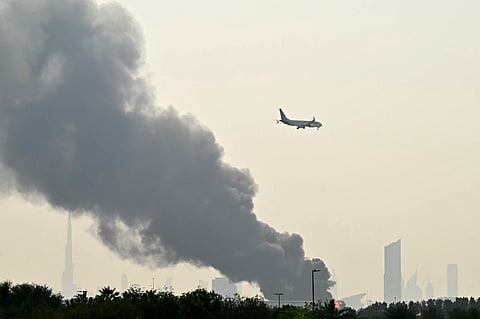

The hospitality sector in West Asia has witnessed a sharp decline in business with occupancy levels at many hotels plunging to single digits as the conflict in the region, which began on February 28, shows no signs of abating. Industry executives say that travellers are currently reluctant to visit the region for either leisure or business.
“Along with this, airlift into these markets has dried up. This is why hotels in this region are experiencing a crisis. So in the short term, the Middle East is pretty tough. We're also at the end of the high season there, meaning the impact will continue but it will be less severe as the coming months are an offseason period anyway,” said Christopher Hartley, CEO of Global Hotel Alliance.
He added that, besides the key destination Dubai, other markets such as Bahrain, Doha, Kuwait, Saudi Arabia, Jordan and Israel are also severely affected.
The ongoing conflict in West Asia, escalating since late February 2026 involving the US-Israel coalition and Iran tensions, has severely disrupted global and regional travel, causing massive cancellations and revenue losses for hotels and airlines. While the US and Israel forces have primarily targeted Iran and certain regions of Lebanon, Iran has launched a massive campaign against nations that have a US airbase and military interests in the region.
According to the World Travel and Tourism Council, the region is losing at least $600 million in visitor spending per day due to declining travel demand. The Middle East attracts about 5% of international tourists and 14% of global transit traffic. Hubs such as Dubai, Doha, and Abu Dhabi, which used to handle over half a million passengers daily, have experienced closures, affecting both tourists and connecting passengers.
A large number of Indians travel to West Asia for business and leisure with Dubai being the most visited city in the region. According to government data, around 7.8 million Indians visited Dubai followed by Saudi Arabia (3.4 million).
As for the hospitality sector, the region, especially Dubai, has one of the highest concentrations of hotels which are jam-packed in the peak holiday season (November to March). Before the conflict began, international tourists were expected to spend around $207 billion in the region in 2026 and their arrivals to the Middle East were projected to grow by around 13% this year. That outlook has completely reversed following the conflict.
Anuraag Bhatnagar, CEO, The Leela Palaces, Hotels and Resorts, said on Friday that the geopolitical conditions have impacted their portfolio on account of cancellations and postponements. The luxury hotel chain had last year acquired 25% stake in Sofitel The Palm FZE, a major luxury beachfront property on Palm Jumeirah, Dubai.
“We have seen a series of cancellations. It seems that most of the delegations and the groups that were coming in, especially from the Middle East, were cancelled and certain programs are pushed back more into the future quarters,” added Bhatnagar. However, he expressed optimism regarding the luxury travel sector's resilience.
"We have lived through 9/11, 26/11, we've been through that. We see that the recovery, especially on the luxury side, is pretty quick, and luxury as a segment has always been far more resilient," Bhatnagar said.
Hartley of Global Hotel Alliance is also confident that once the conflict comes to an end, the recovery will be swift. “As soon as the Covid restrictions were lifted, people started travelling again. This is despite the background noise going on. For example, the Russia-Ukraine war, which has been going on for the last 4 years, hasn't stopped people travelling,” stated Hartley.
