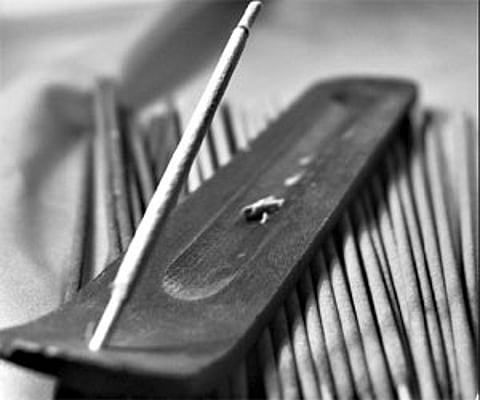

Visualise this. As the sunlight filters through the windows, the fragrance of incense sticks wafts through the living room. Many people would vouch that this is one of the best ways of beginning the day. Incense sticks are a common motif in several religions across the world. To that extent, incense sticks have religious-aesthetic connotations in many cultures.
Fragrant incenses are made by blending several solid scented ingredients into a paste and then rolling that paste onto a bamboo core stick. These incenses usually contain little liquid scents. Charcoal incense is made by dipping an unscented “blank” into a mixture of perfumes and essential oils.
Tibetan incenses are thought to have medicinal properties.
Their recipes come from ancient Vedic texts that are based on Ayurvedic medical texts. The recipes have remained unchanged for centuries.
Throughout history, various materials have been used in making incense. If sage and cedar were used abroad to make these incense sticks, sandalwood is the most popular among all the flavoured incense sticks in India. It one of the most calming incense ingredients and lends itself to meditation.
Incense sticks are believed to be as old as mankind, which find mention in the Old Testament and New Testament. Frankincense was one of the gifts that the three wise men gave when Jesus was born. Ingredients like myrrh, jasmine, bamboo sticks and sandalwood used to make incense sticks were found in abundance in India.
Sanskrit texts mention agarbattis offered during meditation.
The concept extended to places like Egypt, Japan and China. Monks believed it frees them of negative energy. Once Buddhism became popular in Japan, the demand increased.
Sandalwood, rose, jasmine, cedar, amber, frankincense and myrrh are among the aromas which give spiritual fragrance to agarbattis. At a glance, lavender has a calming effect, sandalwood helps fighting depression, rose radiates energy of love and myrrh uplifts emotions.
In terms of practical usage, incense sticks help in getting rid of odours. Probably that’s why they are used in funerary ceremonies because incense could smother the scent of decay. Incense made from materials like citronella can repel mosquitoes.
Today, manufacturing incense sticks has become a handicraft industry.