
BENGALURU: In Kutch embroidery, each work speaks of its craftsperson’s life. “Each product is an expression of self and status,” says Amy Shroff, director of Shrujan, an NGO which helps women artisans from the region make a living from their craft. “”The difference in style and design is what distinguishes one community from another.”
Shrujan is organising an exhibition of their products, which opens today and will go on till February 27 at Raintree, Sankey Road. The fair brings together 12 distinct embroidery styles, each characteristic to a specific community. It features hand-embroidered clothes and furnishings.
The products, traditionally designed and handmade by village women for their families, were an essential part of festivities, marriages and other social gatherings. Now, the art has been revived, and about 4,000 women associated with Shrujan and their families depend on it for a living.
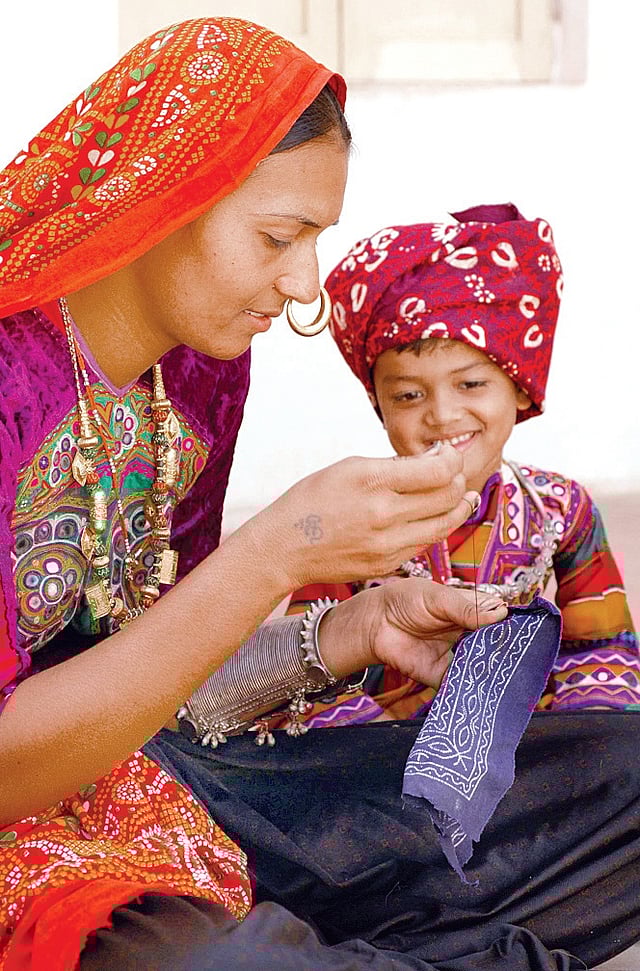
Rajiben gave up farming 22 years ago, and took up embroidery. Income from farming was unpredictable, she says. “When it rains, we get good produce and when it doesn’t, the yield is poor,” she says.
She has studied up to Class 2. “We studied little and joined work. After being associated with this organisation, I became aware of the importance of education,” she says. Rajiben’s daughters go to school, and her son is now an engineer in the USA.
She designs, mixes colours and trains others in embroidery. Girls from her community who had never stepped out of the house are now independent. The feeling of empowerment is what matters to them the most. Sariyaben, another artisan, says, “I teach 11 students about the work. They will in turn teach other people.”
Sariyaben was introduced to Kutch work as a child by her mother. Her family is known for its ahir embroidery. “One of my sisters and her daughter have won awards for their work,” she says proudly. Ahir work is known for its flowing style and colourful presentation.
Embroidering a saree could take as long as a year, according to ahir artisan Jashodaben. Lakshmi, her 19-year-old daughter, translates from Gujarati: “If there is bakhiya design, it might take one year to finish a saree.”
Jashodaben has been embroidering for a decade. Her husband’s death seven years ago left the family in a financial crisis. “Earlier, we used to embroider for ourselves,” adds Lakshmi, who is following in her mother’s footsteps.