
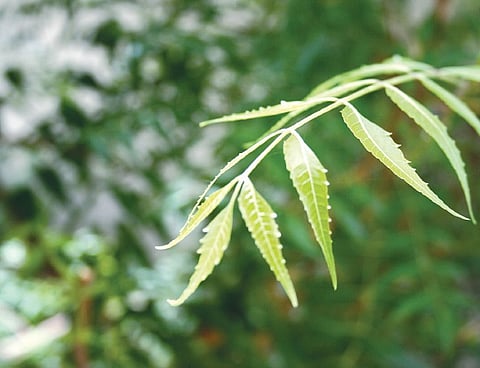
NGO on a drive to plant a billion trees across the country over 21 years
BENGALURU: Jolted into action by the Uttarakhand floods three years ago, an NGO has made it its mission to bring back India’s forests and counter global warming.
Greenveins, headquartered in Ernakulam, Kerala, made its foray into the state only a week ago and claims to have made it 2,000 saplings greener. Across the country, it has planted 7 lakh more.
Its first nursery in Karnataka is located in Advaita Ashrama, Doddaballapur.
The NGO, the brainchild of Swami Samvidanand, aims at planting a billion trees in India over the next 21 years. The organisation has branch offices in Delhi, Odisha and Haridwar.
Plantation, maintenance and distribution of regional saplings is done for free.
“We allow the saplings to grow for at least three months before they are planted,” Dr Sethulekshmy Nair, the organisation’s state coordinator told City Express. “The irrigation methods used depend on where the plantation is located.”
This by-the-people-for-the-people NGO has seen a steady support of various communities, women empowerment initiatives, cultural and environmental groups, and educational institutions.
“I heard about Greenveins from my friends and bought 150 saplings from them for a tree plantation drive by our company,” said Suresh, manager of a software firm. “They were healthy-looking, but not very tall.”
Greenveins nurseries abound with a plethora of saplings — neem, ficus, yellow shower, pink shower, golden shower, rudraksha, aakasha mallige, sampige, woodapple, gooseberry, mango, jackfruit, arjuna and honge.
“The next step is planting more than 2,000 saplings across four districts — Bengaluru Urban, Bengaluru Rural, Kolar and Mandya,” said the state coordinator, adding that the organisation aims to achieve this within the next month.
The NGO undertakes 80 per cent of the plantation between the latter half of May and July-end, when the weather is favourable, Nair added.
“Transportation and availability of regional saplings are major constraints,” he said.