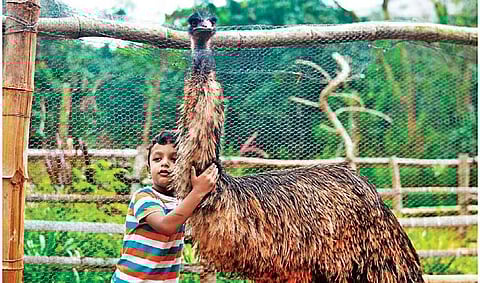

BENGALURU: In March, when the team at Prani – The Pet Sanctuary on Kanakpura Road – took their annual break, little did they know that their vacation would extend to over six months. The bird and animal sanctuary, which is like a children’s learning space, is now struggling for survival, as they have been hit badly in this ongoing pandemic. With costs running high and funds drying out, founder Sanjeev Pednekar is crowdfunding and turning to the public to keep the place alive.
“We’ve not had a single visitor in months. The visits were our only steady source of income to sustain the birds and animals. We have not had a single school child visit us since February 2020 and our funds are drying up,” says Pednekar (30). It costs Prani over `7.5 lakh every month to take care of the 700+ animals and birds. This comprises rent for the three-acre property, well-being of 12 labourers, and food, medicine and vet visits for their animals. These include a horse, five ponies, four donkeys, a cow, five sheep, 17 goats, over 60 rabbits, guinea pigs; over 20 ducks, geese, turkeys, and roosters; over 450 exotic birds, 17 iguanas, seven dogs, seven emus, over 30 terrapins and close to 140 exotic rodents. “We are looking to raise `40 lakh, which also includes paying up of past dues,” he says.
Prani was set up in 2017 and was meant to be a safe haven for rescued animals, birds and reptiles. But Pednekar didn’t want to stop at that. “We wanted to educate the young minds of India about co-existing. Our 25-member team comprises rescuers and caretakers who not only rehabilitate these animals, but also help build their confidence with humans,” says Pednekar, adding that the experience to touch and feed the animals in a controlled environment makes children more empathetic towards them.
The average footfall on a weekday was over 500 during the week with at least five school visits, and another 500 over the weekend. “Most of the animals and birds are exotic creatures, often bought from illegal markets. Many of those who purchase these creatures are unaware of their caring needs and abandon them. We save these animals since they are incapable of fending for themselves in the wild and we attend to their requirements,” he says. Pednekar is hopeful that schools will re-open soon, which will help them see some footfall. “But we are going to restrict the numbers that can enter at any given point in time,” he says.