
BENGALURU: Back in mid-’60s, a schoolboy in a tiny village called Nagathihalli on the edge of Karnataka’s Mandya district was fascinated by the Bengaluru-Mangaluru highway that passed through the village.
He used to dream of hopping onto one of the giant lorries with an ‘All-India Permit’ licence board that would frequent the highway and reach faraway lands...something that he had only heard of from his parents. He was so intrigued with the idea of exploration and travel that he was sure he wanted to become a lorry driver when he ‘grew up’.
While that answer often landed him in trouble, a few decades later, the boy managed to realise his dream of travelling the world through hard work and commitment. Widely known for his films – Undu Hoda Kondu Hoda (1991), Hoomale (1998) and Maathad Maathad Mallige (2007) among others – acclaimed filmmaker Nagathihalli Chandrashekhar is also an avid traveller.
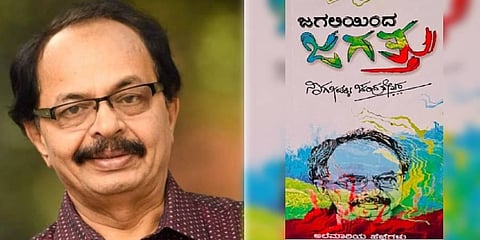
In his recent book titled Jagaliinda Jagattu, the 64-year-old has chronicled his nearly four decades' worth of travel experience, giving an intimate account of each country’s culture, people and lifestyles.
“I always sought to meet the common people of whatever countries I visited, because those are the kinds of people who represent the country,” he says, adding, “Rather than visiting the places frequented by tourists, I always sought to visit remote places, which gives an authentic local experience.”
In the late ’70s, Singaporenalli Raja Kulla became the first Kannada film to be shot outside the country. Two decades later, Chandrashekar’s America America (1996) went a step further, with 90 per cent of the photography taking place abroad.
“When I first went to the United States, the size of the Kannadiga community over there took me by surprise. I wondered if I could tell a story about the community. Back then, shooting Kannada films outside the country meant, at most, having a song sequence. It didn’t really play a central role in the film. I wanted to disrupt that tradition and try something new; make whatever place I shot at, a prominent part of the film, and incorporate the local culture into the plot,” he shares.
Having come from a humble background, Chandrashekar decries the common belief that travel is expensive and out of reach of common people. “While money does play a role, it’s not like you cannot travel without a lot of money. If you genuinely have an interest and you make it a priority, I believe most people can afford to travel. It needs a bit of planning, but it’s possible,” he says.
“I have done quite a few odd jobs – a daily labourer, a signboard writer among others early in my life. Until I managed to land a job as a lecturer, I had a limited income. Yet, I used to save up enough money over a few months to travel.”
A firm believer of travel’s positive influence on one’s mental health, Chandrashekar says, “Most people live their whole lives in a bubble. Only when you step out and explore do you get a different perspective on things.”
With plans to travel to the North Pole in 2023, Chandrashekar also hopes to one day see the earth from afar. “Possibly after space tourism becomes economically viable!” he quips.
