
When we learn about the Indian Independence movement in school, covering everything from the Revolt of 1857 to the Quit India Movement – we are told the large and sweeping story of the nation. In the middle of learning this national history, most of us never thought of asking about the local one – we hear about Kolkata, Madras, Bombay and Delhi all the time but what was happening in Bengaluru?
According to historians, Bangalore being part of the princely state of Mysore and not directly under British rule somewhat tempered anti-British sentiments in the city for a long time. “Bangalore had good British administrators like Sir Mark Cubbon and Lewin Bentham Bowring in the 19th century. We also had progressive maharajas from 1881 onwards. So Bangaloreans did not really nurse much antipathy against either the British or the maharajas. It was only in the last decade before independence that the relationship changed somewhat because of the spirit of nationalism that reigned in the country,” explains author Roopa Pai.
Retired professor of history, Jamuna M adds that the maharajas simultaneously maintained a cordial relationship with the Indian National Congress, putting the state and city, in a comfortable spot.

Mahatma Gandhi visited the city five times between 1915 to 1936. The first time was to unveil a portrait of his idol Gopal Krishna Gokhale at the Government Arts College in the city. The second time, in 1920, was to hold a public meeting at the Quddus Saheb Eidgah Maidan on Miller’s Road to build support for the Khilafat movement. “A few renowned intellectuals like Nittoor Srinivasa Rau, S Nijalingappa and AN Subba Rao attended the meeting. The Khilafat committee donated about `25,000 to Gandhiji,” says Jamuna. One youth named Obaid Ullah was so moved that he upturned his own business. “He was carried away by Gandhi’s message, and so distraught that he had been trading in foreign cloth that he took the entire lot to the Shivajinagar Maidan and burnt it. Later, he opened a khadhi store and he and eight others, were arrested and imprisoned for picketing in front of shops selling foreign cloth on Commercial Street and Shivaji Nagar.”
Things in Bengaluru came to a head with crowds gathering outside the Mysore Bank building after Gandhi called for the Quit India Movement on Aug, 1942. “The district and the city committees of the Mysore Congress were all declared unlawful associations which led to demonstrations in a number of places – people even set fire to a post office at Aralepete, and a police station was also attacked. The police, of course, took to firing, and about six people were killed, and large numbers injured. There was also a dislocation of telegraphs and telephone lines and heavy destruction of roads, railways, and even government buildings,” explains Jamuna.
Emphasising the role of factory workers and students, particularly women students in the movement, Jamuna says, “Girl students participated in large numbers and mill workers from both the Binny Mills and Minerva Mills. Girl students provided relief for the strikers and made all arrangements for them” She adds that this mobilisation didn’t end with Independence, manifesting in a movement to demand the formation of a governement from the maharaja. “Agitational activity continued with the Mysore Chalo movement in 1947 with people in the city and Cantonment assembling at the St Joseph’s College grounds and proceeding to the Russell Market Square,” she says.
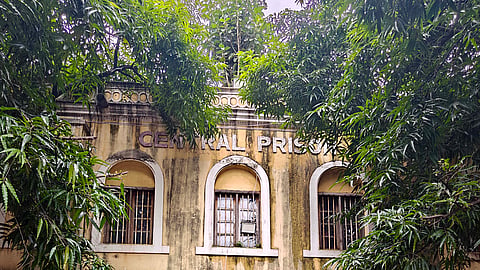
On October 25, 1937, Indian National Congress member and former Mayor of Bombay, KF Nariman, was scheduled to address a gathering of students. Defying a magistrate’s order against it, he took to the stage only to be pulled down by police officers and arrested. Reports from our archives mention the police lathi charging the crowd and shots being fired. Several students were trampled underfoot and injured by bullet wounds with at least one student dying as a result of the shots. Nariman was held at Central Jail and released soon after but protests continued after the incident. Today, a memorial stands at Banappa Park in remembrance of this incident.
Professor Kalpan Haridas, recounts an instance she discovered through oral history of Kasturba Gandhi holding a meeting at a house in 6th Cross, Malleswaram, where she was staying. “An elderly gentleman recounted this instance where prominent women from Bengaluru gathered to meet Kasturba Gandhi. I believe the meeting was to encourage people to join the Congress, and maybe fund collection.” She adds, “My grandmother, whose father was administering the Mysore and Minerva Mills, was in attendance. She was young but actively involved in running the business.”
Back in the day, with the city divided into ‘pete’ where local Indians lived and the ‘Cantonment’ mostly occupied the British, Pai notes that most revolutionary activity happened in the pete. “Revolutionary activity was tantamount to sedition not just against the British but against the maharaja as well. It was concentrated in the pete side of Bangalore ruled by the Maharaja since the old Pete, built by Kempegowda, was where the printing presses that churned out incendiary literature against the government, were based.”
Historian Suresh Moona notes that Tulasi Thota of Chikka Lalbagh grounds, near the Majestic Metro Station, was once teeming with revolutionaries and labour movement leaders. “Factory workers and labour leaders, who were closely tied to the Independence movement in Bengaluru, used to arrange meetings here. The movement of protestors used to start here and then head to Cubbon Park.” In one incident, when the policemen arrived on horses, protestors poured bags of ragi onto the streets to stop their movement.
Another important place for dissent to brew is one that’s still significant today: Freedom Park, then known as Central Jail. “It’s a sacred place of the freedom movement, because most fighters used to be taken there. But these freedom fighters never bothered that they were put in jail and treated it as an occasion to come together and plan the next movement. Many big shots like Dr H Narasimhaiah, George Fernandes, even LK Advani were prisoners at Central Jail,” says Moona.