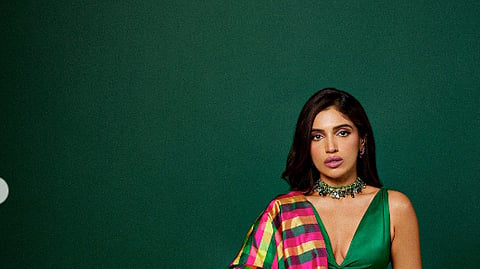

Few patterns embody both heritage and modernity like Madras checks. Reimagined in contemporary cuts, the fabric, handwoven in Madras, carries the warmth of its tropical origins and the subtle charm of hues that softly bleed into one another. The pattern has caught the attention of modern style icons such as Diana Penty, Janhvi Kapoor, Ananya Panday and Bhumi Pednekar, reflecting its effortless versatility and grounding its relevance in craftsmanship, character and timeless appeal.
Timeless Versatility
Madras checks have an adaptability that keeps them relevant across generations. Designer Rini Phalgunan observes that the colours shift effortlessly with different moods and eras, balancing nostalgia with contemporary style. Stylist Ambarish Sonari describes the checks as an ‘heirloom and an attitude in one, nostalgic in texture, modern in rhythm’, carrying a charm that feels fresh in contemporary silhouettes while rooted in tradition.
The fabric’s origins tell a story of practicality and artistry. “Fine cotton was woven across southern India to suit the climatic conditions,” notes textile revivalist Pavithra Muddaya. She explains that checks emerged naturally in weaving traditions worldwide, known by different names across cultures. She also highlights how defective fabrics were once elevated to aspirational exports, although today’s reliance on power looms has reduced opportunities for traditional artisans.
Fashion designer Latha Puttanna underscores the enduring legacy, saying, “Madras checks are global and alive. It’s a timeless design, which will always be in style as it is natural and breathable. It has been and will be celebrated for its uniqueness.”

Global Journey & Imperfections
By the mid-20th century, Madras checks had reached the US, becoming a symbol of preppy summer style in lightweight shirts, casual blazers and resort wear. Long before that, during colonial trade routes, European merchants exported the fabric as a breathable textile, transforming a regional handloom into a globally recognised fashion vocabulary. Among its quirks were the ‘bleeding checks’, where dyes ran slightly during weaving, once dismissed as flaws.
Phalgunan calls the international embrace of the fabric ‘a fascinating journey.’ She adds, “I love the story of ‘bleeding checks.’ What people once saw as a defect is now viewed as authenticity. Those little irregularities like the dye running and the handwoven texture, make every piece one of a kind. Today’s generation is drawn to exactly that: fabric that feels human, imperfect and alive.” Puttanna echoes this, noting that audiences now value uniqueness over blindly following trends, further reinforcing the timeless appeal of Madras checks.
Styling, Craft & Legacy
Subtlety and creativity remain key to styling. Oversized shirts with straight trousers, co-ord sets, skirts of varying lengths, or lightweight scarves paired with jeans and linen shirts allow the checks to shine. Phalgunan shares, “I style Madras checks with solid, neutral separates as it lets the pattern breathe.” Sonari notes how the pattern anchors elegance when paired with lean denim, clean leathers or metallic touches. Puttanna adds that if woven into light scarves, these can be paired with jeans and linen shirts, highlighting the youthful versatility of the checks.
Madras checks have graced international runways at Dior’s pre-fall 2023 show and Ralph Lauren’s ‘Mad for Madras’ collection, and appeared on screen in Mad Men (2007) and The Outsiders (1983), reflecting 1960s style and preppy elegance, highlighting its global appeal and timeless craftsmanship.
Coast To Couture
Madras checks trace their origins to 17th-century Madrasapattinam (now Chennai), handwoven from soft cotton into garments like lungis, dhotis, shirts and head wraps for coastal communities. Dyed with vegetable colours, they reflected the region’s textile heritage. By the mid-17th century, British merchants exported the fabric to Europe as Real Madras Handkerchiefs (RMHK), cutting long bales into smaller pieces to evade taxes. Portuguese traders carried it to West Africa as part of exchange networks tied to the slave trade. There, among the Kalabari and Igbo ethnic groups of Nigeria, it became known as ‘Injiri’ (means Real India), worn as headscarves or wraps during ceremonies, like births and funerals.