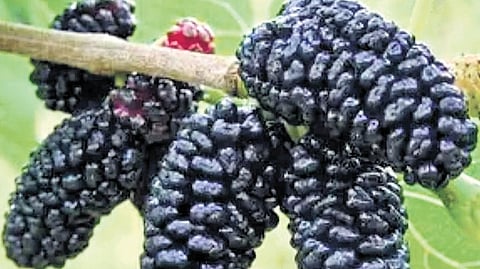

KOPPAL: A dry district’s farmers are increasingly growing exotic fruits like Japan’s Miyazaki, Chinese orange, Rambutan, Malaysian Guava, Litchi, Plum, Star Fruit and many more using drought-tolerant varieties and smart farming, transforming arid lands into productive orchards.
These fruits are now being grown at dry lands of Koppal, Kushtagi and Kanakagiri taluks in the district. Over the last five years, farmers and entrepreneurs have realized the potential for exotic fruits and new varieties for both domestic and international markets.
The Ministry of Agriculture and Farmers Welfare has identified 10 exotic fruits of commercial importance and has instructed state horticulture departments to expand their cultivation last year. But in Koppal, horticulture department had started exotic fruits plantation awareness a decade ago.
Several farmers in Koppal district got training from the horticulture department. The department is now aiming to make the district a horticulture hub. Several farmers are now growing Japan-based Ruby Roman Grapes and other exotic fruits. Farmers in Koppal, one of the backward districts of North Karnataka, have now become a role model for others.
Farmers in surrounding districts who visit here say that they have not even heard the name of the fruits but Koppal farmers are growing them and are making profit from the venture.
The horticulture department has been guiding the farmers about the planting of foreign fruit saplings for more than a decade. Led by senior horticulture director Krishna Ukkund, teams have been visiting farmers’ places and giving them tips on how to grow them and get a handsome profit.

Koppal farmers recently got to know more about the fruits during the Mango Mela. Union Finance Minister Nirmala Sitharaman had inaugurated the Farmer Producers’ Organisations for farmers at Methagal three months back.
Those who have been growing mango are now interested in growing exotic fruits. This year many mango growers are happy as they got a good crop.
Bharat, a farmer said, “We were initially skeptical about growing exotic fruits. But Ukkund said if we lost money, he will pay the saplings money of Rs 2 lakh to us. Eventually we got a profit of Rs 10 lakh.”
Ukkund said, “We have been creating awareness about the foreign fruits for the last few years. Now several farmers got profit after growing Miyazaki and other fruits. Koppal will soon become a hub for foreign fruits in Karnataka.”
Trend came from NRIs
Non-Resident Indians who started visiting organic fruits mela and mango mela in Koppal observed rare varieties of fruits in Koppal. Several of them asked for foreign fruits. The horticulture department arranged for the saplings. Officials then created awareness about exotic fruits among farmers.
Who buys foreign fruits
NRIs and software professionals from Bengaluru, Hyderabad and Pune visit Koppal to buy exotic fruits. Wholesale buyers, agents and exporters from Bengaluru give bulk orders to send fruits to Goa, Maharashtra, Delhi, Andhra Pradesh and several other states.
Stunning transformation
Kushtagi, Kanakagiri and Koppal taluks are drought-prone. The horticulture department identified such lands and held awareness programmes for farmers. Initially farmers said this was not possible as they were dependent on rain. Then officials organised training programmes. Now villagers are transforming dry lands into productive fruit farms by adopting water-efficient methods, natural farming and drought-resistant crops with government support for water conservation, turning barren areas into profitable ventures with fruits like dragon fruit and creating sustainable livelihoods despite water scarcity.