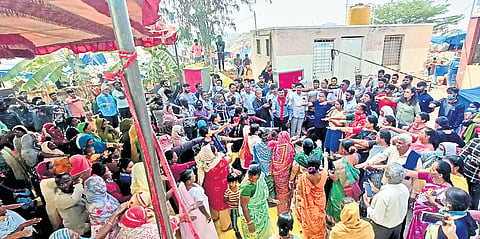

BENGALURU: Amid growing uncertainty over rehabilitation of residents of Fakeer Colony in Kogilu near Yelahanka, various progressive organisations and residents held a public meeting opposing the statements by BJP leaders branding the displaced residents as “Bangladeshis”.
They demanded that alternative accommodation be provided to the evictees or they be granted permission to erect temporary shelters on the contentious site, and food and health facilities should be made available as per the order from the Human Rights Commission.
The public meeting, which began with the reading of the Preamble of the constitution, was organised under the banner of the newly formed Kogilu Slum Residents Struggle Committee here on Sunday, on the 16th day of demolition of homes by the Greater Bengaluru Authority (GBA).
Representatives from Dalit organisations, All India Janavadi Mahila Sanghathane, Dudiyuva Janara Vedike, National Federation of Indian Women, Left parties, including CPI and CPM, Islamic student groups, and civil society organisations participated and addressed the gathering.
The speakers strongly condemned what they termed the “politics of stigmatisation”, alleging that BJP leaders were attempting to derail the Congress government’s decision to rehabilitate the affected families by portraying them as illegal immigrants from Bangladesh.
“The residents were living there for years. Even if the land belonged to the government, they were not homeless until the demolition made them so,” Nandini, a representative from Dhudiyuva Janara Vedike, said.
The organisers clarified that they were not opposed to housing being provided to other eligible beneficiaries but demanded that the Kogilu residents be rehabilitated immediately, as promised by Chief Minister Siddaramaiah and Housing Minister B Z Zameer Ahmed.
With summer approaching and families spending over two weeks without shelter, the speakers stressed that rehabilitation must be treated as an emergency. Listing multiple issues, the residents said they are not able to cook their own food, some of them are suffering from health issues and their children are not able to attend schools. They called on the government to act without further delay and warned against politicising the issue.
The residents gave an ultimatum of two days to the state government to provide them with alternate arrangements, or they would plan protests.
