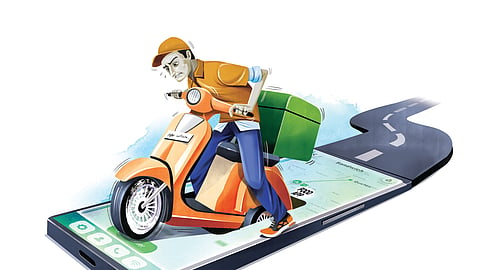

The delivery time should be realistic. The 10-minute delivery system makes our job arduous and keeps us under a lot of pressure. If delayed, our ID rating gets affected, and as a result orders may not be processed properly. Sometimes the app also reduces the payment for the order. When the delivery is late, our score in the app drops. The app keeps showing alerts like ‘deliver fast or you won’t get orders’, which adds stress. Additionally, the urge to maintain good rating forces us to rash-ride. If the food is delivered late, customers tell us off, even if the delay is caused by traffic. If the customer doesn’t pick up the call, we are asked to wait for 30 minutes and no waiting fee is provided. We lose time and miss other orders. Many times, restaurants delay preparing the food and we are forced to wait there as well. But even so, customers complain about us and this again affects our ratings. The app fixes a strict delivery time, but it does not consider Bengaluru traffic, signals, road blocks, rain or accidents. Overall, this system puts riders’ lives at risk, causes mental stress, affects earnings and makes the job unsafe.

I’d still order online because it’s more convenient than going to a store. Even with longer delivery times, these apps save time and effort. But, if it meant workers had safer schedules, fair pay and less pressure, it would feel more ethical and humane, which I wouldn’t mind. Companies should rethink whether speed need to be the main success metric, include worker feedback to understand on-ground realities and ensure fair pay, safety measures and reasonable shifts in the system.
I do think speed has changed how we value people’s work. Convenience has become the priority, and the effort, risk and time workers put in often get overlooked because fast delivery feels normal now. At the same time, I’d still use these apps even if deliveries took a bit longer, especially if it meant fairer conditions for workers. That said, I won’t pretend speed doesn’t matter. Saving time definitely influences everyday choices. Delivery timelines need to be more realistic, pay needs to be fair, and safety should come before speed. When workers are protesting, it’s a clear sign that the system needs to be rethought, not just pushed to be faster.
Acceptance that the company’s model is based on labour exploitation is key. While they argue that it’s a side hustle and hence, employee security does not matter, I’m sure for many it’s also a main source of income. Hence, the companies should provide options for hiring either as gig workers or as employees. The protests are constructive feedback not taken seriously by companies and finding ways to make their partners feel secure can actually be beneficial to their business. Instead of spending on marketing, this could be their ultimate way of showing company values. Unbiased customer opinion on fast delivery can help them understand the actual needs of people.
I use apps like Blinkit and Zepto quite often, mainly for my convenience. Especially late at night or when something urgent is missing while cooking, these apps become essential. Gig workers have become the fabric of urban life in cities like Bengaluru. Steps like insurance, accident cover and welfare measures are absolutely necessary, and it’s good that the government has begun acknowledging this. Personally, the 10-minute delivery make life easier, and on a larger level, they also create jobs and livelihoods. Occasional delays – once in a blue moon are acceptable, there’s always room for human error – but if delays become frequent, it raises questions because delivery time is a core part of the service promised.
I use 10-minute delivery apps occasionally, mostly in emergencies. Convenience matters more than speed when traffic is heavy or stepping out isn’t possible. If deliveries are delayed, I’m willing to wait or check other platforms; plans can always be adjusted. As customers, we share equal responsibility – using these services during heavy rain or unsafe conditions doesn’t make moral sense. The strike hasn’t changed my view as much as made these issues more visible. Companies must stop over-promising delivery timelines and prioritise worker safety.