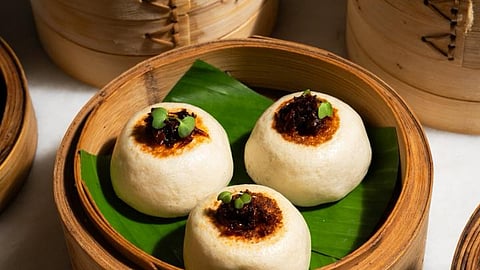

On a cool evening in ooru, there is something reassuring about lifting the lid off a bamboo steamer. The rush of steam, the soft give of a pillowy bao, seems to arrive at the table carrying warmth and comfort with it. Across the city, the humble steamed treat has been making a more frequent appearance, moving from niche menus to centre stage and chefs say it feels like a moment that was bound to happen.
For Wanming Li, executive chef and co-founder, Bao To Me in Koramangala, bao is less a trend and more a continuation of life. “Growing up, Sunday evenings usually meant the whole family making baos together. Someone rolling dough, someone filling and someone standing by the steamer. It was never perfect, but it was always fun. It’s a family interaction that I cherish deeply, so sharing that with the city I grew up in only felt natural,” he says.
At the pan-Asian restaurant, classic flavours dominate. “The char siu is a crowd favourite. It’s Chinese-style barbecue pork done the way we love it. And then there are the dessert baos – custard, dou sha and black sesame. They are gentle; the kind that just feels like a warm hug at the end,” he says. Li believes baos not restricted to seasons, but winter gives it a special emotional pull, as he shares, “Baos can be eaten all year round. The soft, fluffy dough works with everything. But come the cold season, a nice steaming bao basket is just the best comfort food you can share with someone you love on a nice cold evening.”

That idea of baos as comfort food shows up repeatedly across kitchens, which is also quite evident on social media. At Amicii, co-founder Prashant says baos slipped easily into the restaurant’s global pan-Asian offering. “We introduced baos to the menu keeping in mind the growing interest in pan-Asian cuisine in city. Baos are globally familiar and complements our menu, alongside offerings like uramaki and dim sums,” he explains.
Winter, he notes, sharpens the demand, with people naturally gravitating toward warm and comforting food. “Steamed dishes like baos and dim sums see a clear rise in demand,” Prashant says. This season, Amicii has leaned into bolder fillings. “Since baos have a mildly-sweet base, it pairs beautifully with bold, spicy and creamy fillings. Options like chicken, mushrooms and duck with a strong umami flavours are specially popular during the winter months,” he says, adding that Indo-Chinese twists like ghee roast and pepper fry fillings have also found favour.
At Nasi and Mee, baos have been part of the story from early on. Corporate chef Ujjain Tanwar Singh says the idea was to make baos feel familiar yet distinctive. This led to three different expressions –– the char sui bao as a savoury classic, the lamb bao as a bolder evolution and the panda bao as a playful dessert offering. “While savoury baos see a noticeable uptick during winter, the panda baos are consistently ordered throughout the year, regardless of weather. Our approach has been able respectful reinterpretation rather than aggressive fusion,” he says. The char sui bao is their take on the traditional Cantonese baozi, where char sui chicken filling is used to suit the customer.
Across kitchens, chefs agree that while filling gets the attention, the bun is where the real work lies. “The real challenge is the bun. Even a slight variation in proofing or steaming can change the experience entirely,” Singh adds.
Chef Tenzin Khetsok of Yazu, Bengaluru, echoes similar sentiment. “Baos work beautifully as a winter snack because its warm, soft and comforting. The steamed bun carries exceptionally well, allowing bold fillings to feel satisfying without being heavy. That balance is what makes it so appealing,” he says, recommending baos with slow-cooked meats, richer sauces and deeper umami flavours rather than the lighter fillings. “Options that bring in miso, soy, fermented elements or gentle heat work beautifully in cooler weather. These flavours feel comforting yet elevated and pair well with the rest of our pan-Asian menu for a complete dining experience,” Khetsok adds.
Looking forward, chefs see baos settling in rather than fading out. “Baos are here to stay. People are travelling more and the internet has opened everyone up to new food and cultures. It feels like only a matter of time before baos really take off as everyday comfort food, kind of the way pizza did,” Li says.