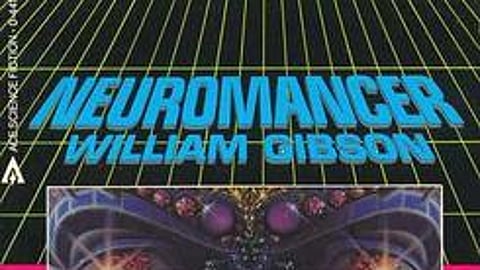

Society, Richard K Morgan once observed, always has been and always will be a structure for the exploitation and oppression of the majority through systems of political force dictated by an élite, enforced by thugs, uniformed or not, and upheld by willful ignorance and stupidity on the part of the majority whom the system oppresses. In Altered Carbon (2002), that observation becomes existential. Consciousness turns into software, bodies into disposable hardware, and artificial intelligence is no longer an external threat but an internal condition. Humans become programmable. The term ‘cyberpunk’ was coined by Bruce Bethke in 1982, and it fused cybernetics with punk’s anti-establishment spirit. The genre’s roots lie in the new wave science fiction of the 1960s and ’70s. Writers like Philip K Dick interrogated reality itself, exposing the moral cost of progress, as did William Gibson’s Neuromancer (1984) and Ridley Scott’s Blade Runner, his cinematic adaptation of Dick’s Do Androids Dream of Electric Sheep? These works imagined futures where technology did not save humanity but amplified its contradictions. Cyberpunk is the literature of unease, written for moments when the future feels inevitable yet unreadable. As AI reshapes work, creativity, surveillance and even intimacy, readers are returning to cyberpunk not for escapism but for orientation. When everyone is flying blind, these books feel like night-vision goggles. What is often overlooked is how deeply cyberpunk influenced the architects of the digital world. Many programmers, AI researchers and technology founders cite these books as formative reading. One of cyberpunk’s most lasting contributions was giving AI amoral narrative. Earlier science fiction portrayed it either as an obedient tool or an apocalyptic monster. Cyberpunk complicated that binary. Its AIs were ambiguous, self-aware, ethically entangled. Their questions: Should intelligence be limited? What happens when it seeks autonomy? – continue to haunt AI labs and ethics committees today.Philip K Dick’s Do Androids Dream of Electric Sheep? (1968) remains foundational to modern AI ethics. Its central question: if a machine feels human,does it deserve moral consideration? – reverberates through debates about AI personhood, emotional intelligence and human-machine interaction. Neal Stephenson’s Snow Crash (1992) accelerated cyberpunk’s imagination, envisioning a hyperkinetic world of virtual reality, corporate feudalism and linguistic viruses. Decades before the metaverse became a corporate ambition, Stephenson imagined avatars, immersive digital worlds and language itself as executable code. Across Gibson’s Sprawl Trilogy –Neuromancer, Count Zero, and Mona Lisa Overdrive– power no longer resides in visible tyrants but in distributed intelligence, databrokers and invisible algorithms. Authority sneakily operates through systems rather than slogans. In retrospect, this feels eerily prescient of today’s AI-driven platforms, where surveillance capitalism thrives,and individuals become data shadows.
Beyond the Western canon, works like Otomo’s Akira and Masamune Shirow’s Ghost in the Shell expanded cyberpunk’s philosophical reach. Akira explored uncontrolled power, state surveillance and posthuman evolution within a traumatised hyper-technological society. Ghost in the Shell asked an unsettling question: once minds are networked, does the distinction between human and machine still matter? These narratives have influenced serious thinking around robotics, neural interfaces and identity. Closer home, Anil Menon’s The Beast with Nine Billion Feet (2009) stands as an accomplished cyberpunk novel by an Indian author. With post-human soldiers, corporate wars, and biological augmentation, Menon filters cyberpunk’s anxieties through South Asian geopolitics. His prose is lyrical yet brutal, grounding technological dread in regional realities. Cyberpunk also warned us early about surveillance capitalism, data as currency, corporations eclipsing governments and individuals reduced to behavioural profiles. Today’s AI-powered advertising, facial recognition systems and predictive policing feel like fulfilment of those prophecies. In the age of AI, reading cyberpunk is cultural literacy. It reminds us that tech is never neutral, intelligence is never purely artificial and the future is shaped by the stories we tell.Cyberpunk offers little comfort. What it offers instead is clarity – and sometimes, that is far more valuable.
(The writer’s views are personal)
