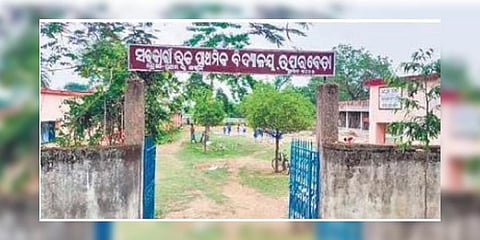

BHUBANESWAR: Uparbeda, a village under the Kusumi block in the Rairangpur Assembly constituency of the Mayurbhanj district, is no longer going to be non-descript, thanks to Droupadi Murmu, India’s first tribal President. But much before the President-elect propelled it into the spotlight, this quiet village remained a political hotbed for the dominant Santhali tribe while earning the unique distinction of sending three of its children including Droupadi to the Odisha Legislative Assembly and another to Lok Sabha. Now home to a population of around 2,500, Uparbeda was relatively progressive from a political point of view. Not many know that it even elected an MLA who went on to become the Finance Minister of the State at least five decades back.
Kartik Charan Majhi, son of Chandra Mohan Majhi and a lawyer by profession, was the first from Uparbeda to lay the foundation by getting elected from Rairangpur (ST) seat in 1967 on a Swatantra Party ticket. Even though a first-timer, Majhi, a relative of Droupadi, was a minister and held different portfolios like Finance, Home, Urban Development, and Works and Transport in the Cabinet of Chief Minister R N Singhdeo from 1967 to 1971.
History was building itself, slowly but surely. After a gap of 14 years, Bhabendra Nath Murmu, another son of the soil, was elected to the Assembly on a Congress ticket. A mining engineer, Murmu served the Central Coalfields Limited as Superintendent of Mines.“Since he was not keeping good health, Murmu contemplated to quit the job and try something else. Some relatives and well-wishers persuaded him to try his luck in politics,” former MP from Maryubhanj Salkhan Murmu, also a cousin of Murmu told The New Indian Express.
After quitting the mining job, Murmu approached top leaders of the Congress including then Minister Niranjan Patnaik who arranged for a meeting with Chief Minister JB Patnaik. His educational and professional background helped him earn a ticket from Congress to fight the election in 1985. Exactly a year after getting elected as MLA, Murmu passed away on March 3, 1986. Three elections later, it was the turn of Droupadi, the daughter of Uparbeda, who got elected consecutively from Rairangpur to the 12th (2000-04) and 13th (2004-09) Assembly. She was destined to write history in golden letters and her remote village, 280 km from the State capital of Bhubaneswar, is now an important spot on the world map.
The story of Salkhan Murmu, another from the same soil, is a little different. Though his father belongs to Uparbeda, the family migrated to Karandih within Parasudih police limits in East Singhbhum of Jharkhand in search of a job in Jamshedpur where Tata Steel set up the first steel plant in the country in 1907.
Born in Karandih, Salkhan did his post-graduation in Commerce in Jamshedpur. He was in a senior executive post at Tata Steel for 10 years and quit the job in 1989 to pursue a career in politics. He joined the movement for a separate state of Jharkhand and successfully held a rally in New Delhi as president of the All India Jharkhand Party.
“Some BJP leaders including the sitting BJD MLA from Morada (in Mayurbhanj district) Rajkishore Das approached me to join the saffron party with a promise to give me a party ticket for the 1996 Lok Sabha election. I agreed to their proposal and joined the fray. However, I lost the election,” the former MP said.
Elected twice to Lok Sabha from BJP ticket from Mayurbhanj seat in 1998 and 1999, Murmu refused to contest the next election as he wanted to work for tribal self-rule system reforms.“I had a meeting with Droupadi at her Rairangpur residence on April 18 and we discussed a wide range of issues pertaining to tribal welfare and tribal self-rule. I called her again on June 22 to wish her after her nomination as Presidential candidate,” he said.For statistics' sake, Rairangpur Assembly Constituency sent 13 representatives to the State Assembly between 1952 and 2022 and three are from Uparbeda village alone.
