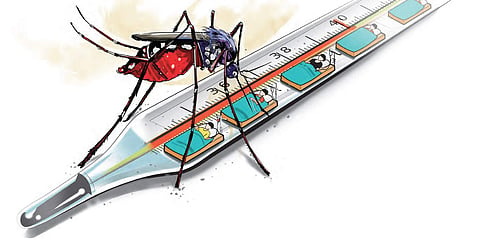

BHUBANESWAR: Rising cases of dengue due to increased rainfall activity and inadequate sanitation measures has pushed the number of infection hotspots in the state capital from three to nine within a fortnight. The surging patient load has also prompted authorities of Capital Hospital to increase bed strength for dengue patients from 10 to 60.

Sources said nine new cases were detected in the city in the last 24 hours taking the total number of dengue cases to 226 in Khurda region. Of these, 165 are from Bhubaneswar and its peripheral areas. While 103 cases were detected in the city and nearby localities in June, 77 cases have been reported so far this month.
The new cases are majorly from Jaydev Vihar, Maitri Vihar, Nayapalli, Old Town, Saheed Nagar, Sailashree Vihar, Satya Nagar and Vani Vihar. With the rise in infection count, the number of hotspots in the city have also increased from three to nine. They are Acharya Vihar, Bhimatangi, Chandrasekharpur, CRP, IRC village, Jayadev Vihar, Nayapalli, Pokharipur and Satya Nagar. The places have recorded more than five cases.
At least 12 patients are now undergoing treatment in Capital Hospital. Keeping in view the increasing patient load, the number of beds for dengue patients in the government health facility has been increased from existing 10 to 60, said Bhubaneswar Municipal Corporation (BMC) and National Vector Borne Disease Control Programme (NVBDCP) sources.
With BMC allegedly failing to take up source reduction, bush cutting and cleanliness drive adequately in the vulnerable areas, the chances of further increase in the infection count has gone up. An official from the civic body said source reduction and awareness drives have been intensified involving health and BMC staff. “Fogging is being carried out twice a day at the hospots while oil to prevent mosquito breeding is also being sprayed in vulnerable areas,” he said.