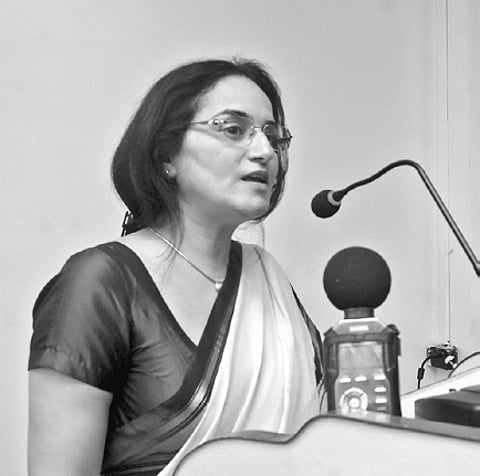

CHENNAI: The inscriptions at Erragudi caves, Andhra Pradesh, are still fresh, centuries after the reign of the third emperor of Mauryan dynasty, Ashoka, said Nayanjot Lahiri, archaeologist and professor at the University of Delhi, at a lecture organised by the Infosys Science Foundation on Wednesday. “These edicts show that his influence has been pervasive; one can find them in Rajasthan and in Karnataka as well. The content in these edicts, when deciphered, evoked a universal admiration among the historians, which was the biggest for an Indian ruler before the times of Gandhi,” she said.
The research on these inscriptions and edicts was instrumental in Nayanjot’s attempt to write the emperor’s biography as the accounts made by historians were not sufficient. Shetook the audience through various aspects of the emperor’s life, found after research on his inscriptions and accounts of various Buddhists. She brought out the major roles Ashoka played – a king and a propagator of Buddhism.
She said that, as a king, Ashoka used these edicts and inscriptions as public documents with mentions of the neighbouring rulers such as the Cholas and Pandyas in the South. She quoted excerpts from inscriptions that portrayed him as an amenable ruler. “He was accessible to reporters during any time of the day, even while he was dining,” she added.
His edicts were also means of public communication as a believer of Buddhism and his atonement for the massacre at the Kalinga war. There were edicts and inscriptions that showed his children, Mahendra and Sanghamitra, as supporters. “A work of art portraying Sanghamitra carrying a ‘Bodhi tree’ sapling to Srilanka is a classic example,” she said.
She stated that although his edicts convey both the facets of his life alike, artists, whose works came to light years later, tended to look at the emperor through the Buddhist lens, and his political genius faded away. Nevertheless, these aspects of his life made him revered by historians and people alike, she said.