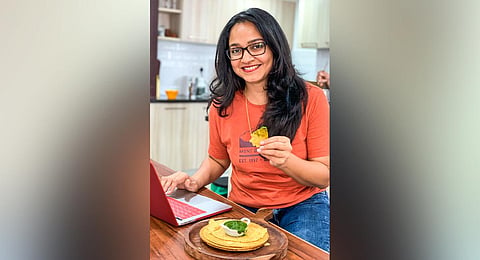

CHENNAI : Putting together a combination of dishes without it being ‘boring’ to our palate might be a task, but flipping through Bengaluru-based popular food blogger Archana Doshi’s 30 Meal Plans From Archana’s Kitchen, it seems like whipping up a balanced lunch or dinner can be easy — at least not when you have a guide.
The meal plans are simple. There are carbohydrates, proteins and fibres, and some of them have a sweet treat, perhaps for cheat days. The mouthwatering combination of dishes pushed me to try one such meal for a family get-together. Nawab Kofta Curry, Rajasthani Kadhi, Paneer Pulao, Boondi Raita, Jowar Roti, Lacha Pyaz and Jhat Pat Mirchi drew my attention. A little cumbersome, it was a wholesome meal that filled our stomachs and hearts.
Similarly, there are 29 other plans in the book that combine dishes from across India and bring them on one plate. A believer of the fact that “Meals and dishes are totally mood-based”, Archana found success through her website and YouTube channel (Archana’s Kitchen) which is sought after for healthy recipes that are focused on portion-control meal ideas for everyday health, diabetic-friendly recipes, cholesterol-friendly recipes and so much more.
Excerpts follow.
Fifteen years of being a food blogger, and this is your first book. My love for food and cooking started when at the age of eight, I put an on apron and began cooking with my mother, and have never looked back. Even though I was formally trained in software engineering, my heart remained in food. Over the years, as I cooked for friends and family, the single-most problem which they would share with me was they found cooking too difficult and intimidating. I would listen and tell them, “It’s not difficult, just start experimenting with ingredients and things will slowly start falling into place”. I realised, it was easier for me to say that and harder for them to do.
After two and a half years of working as a software engineer I switched careers and built Archana’s Kitchen, with the primary aim of enabling cooking to be easier by way of recipes and videos which can be accessed anywhere around the world. Every day I dream and work towards empowering people with skills for easy and effortless cooking which will enable them to lead a healthy life. I strongly believe that health resides on the dinner table.
I founded Archana’s Kitchen in November 2007 and today, Archana’s Kitchen is a leading recipe and food discovery website that gives the world credible and confident ‘DIY’ solutions for everyday cooking. The website empowers people to cook nutritious food easily in the kitchen. It has millions using the recipes and videos enhanced with rich content like quick healthy breakfast ideas, dinner ideas, lunch box ideas, party menus, festival recipes and much more.
The weekly meal plans are immensely popular on a platform where users are given ideas on how they can plan their weekly meals from breakfast, lunch and dinner. Meal plans led to planning every individual meal and how to plate it and make it wholesome and yet delicious. And thus began my quest to nail the problem of overeating and food-related diseases. I began my research and personal practice on mindful and portion-controlled meals and found huge benefits from not just reduction on weight but ability to not eat right for good health.

The book introduces us to several regional cuisines. Can you tell us about the curation process for the 30 meals that have been featured? Will there be a sequel to this?
The book was born out of this personal practice of portioning meals, keeping in a balanced nutrition. Having such a wide exposure to cooking various cuisines every day, often I would find myself pairing dishes across various cuisines and making a delicious meal. Each one of the meals you find in this book is what I have cooked at home for my family. And yes there are so many more combinations and plates which I guess will see the light in volume 2 of this book — hopefully one day.
You mention the thali concept in your book and the ‘katori diet’. What are the dos and don’ts in this concept? How can one achieve a balanced plate?
Cooking meals in a ‘katori diet’ fashion, like I describe in the book, had become normal at home. So when we finalised that the first book was on meal plans, I was overjoyed. I simply clicked pictures of everyday foods that I plated for my family and voila, the book was born. As for writing the book, I think it was second nature, it came naturally to pen down the recipes and bring out my love for cooking in each one of them.
A great way to practice portion control is something I like to call the ‘katori diet’ which can be done using the regular small size katori at home or using a thali/slotted plate. A portion is the amount of food you serve on your plate. It is the amount of food that your body needs during a meal or a snack. It can be hard to measure every portion of the food you eat but yet there are some simple ways to know if you are eating the right portion sizes which I personally have been practising for years.
Using the thali/slotted plate or katoris like we have shown in the meal ideas of this book you will be able to get a feel for how much carbs, protein, fats and veggies to have in a meal and also control the quantity of food that you eat.
We can be sure we are eating a balanced meal by filling the three or four cavities of the thali or katoris with salad, dals/proteins, carbohydrates and the rest like pickles and curd/ chaas etc. By doing this you ensure you have the right portions of food on the plate.
How did you decide on the recipes to include from the thousands you’ve mastered and showcased over the years?
I love mixing and matching cuisines, and pairing foods that naturally go together has become the normal meal planning cycle at home. However, for the book I did consciously try to bring together various cuisines across India where you would only eat at home and never find in a restaurant. I also consciously brought in the fusion food pairings to give an idea of how beautifully dishes across cuisines can come together to form a delicious meal. The plate on the book cover is a classic example; it has a Gujarati thepla, Rajasthani moongphali bhindi, Kerala olan and matta rice. And you will be pleasantly surprised how beautifully they pair together.
You have included summer and winter thalis in the book. How important is it to have vegetables as per your region and its weather?
It is a good idea to keep trying and cooking with seasonal vegetables. A lot of times, the freshness and taste will be the best when it is seasonal. Of course there are many which are now available throughout the year and a few now which are mostly seasonal. Oftentimes, when I pick a vegetable, I try to work my hands with cuisines and dishes I have not tried before to bring in variety into the palate and our diet.
Would you suggest readers modify the meal plans you have offered with what’s available in their kitchen? Or mix and match the meal plans?
Absolutely. The essence of the entire book is about bringing various food groups together. You will also notice that I have paired dishes from various cuisines which go well together.