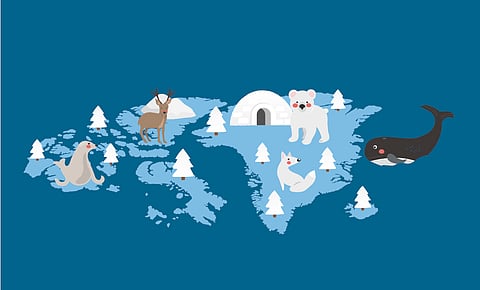

It’s been a month of incredulity for world citizens. To be honest, it’s been months rather. Powerful world leaders are turning into bullies, putting even the Vikings and their plundering ways to shame. Every day we wake up to the next preposterous demand from elected dictators. Last week, it was Greenland’s turn to top the charts as a hot favourite topic. The quiet Arctic island was thrust into the spotlight after the US President threateningly made claims of ownership. Suddenly, netizens were searching the virtual world of infinite knowledge for all things Greenland. Is Greenland really green, or could it be yellow? What is the distance between Greenland and New York? Does Greenland have a McDonald’s outlet? No, Greenland is not a land of green vegetables. The name was coined by Erik, the Red, who was exiled from Iceland for a crime, set sail on his ship with his large family and his slaves, discovered this icy land, and called it Greenland to hoodwink other settlers with the alluring name. As always, the art created by the inhabitants of the land through the centuries tells the stories of their culture.
The earliest traces of art in Greenland can be found as carvings and small figurines. Greenland’s cultural history is full of dreadful monsters, myths that were possibly triggered by the harsh cold weather. The first artefact that any visitor would encounter is a small carving called the Tupilak, made of wood or animal bone, sold in every souvenir store. Although it has been reduced to a ‘cute’ object now. It wasn’t intended to be so. A traditional Tupilak was made of human and animal parts, which were placed by a river long enough for it to come to life with rituals, and was then sent out to sea to attack an enemy. The assault could backfire if the victim’s magical powers were far superior, and these spiritual creatures could then destroy their own creator! A spooky history indeed for something that’s considered popular art now!
As for fine art, artists typically depicted life and the mythical stories of the land. Once the Europeans set foot on the soil in the 16th century, art in Greenland transformed. New techniques seeped in, and artists like Hans Lynge started using European Impressionism for Greenlandic themes. Danish artists went on expeditions, armed with their brushes and paints, to capture the breathtaking landscapes. These paintings were almost completely by male artists and represented a colonial view of Greenland. By the 1970s, artists started using the medium to express political views in the island’s quest to gain autonomy from Denmark.
Contemporary artists in this serene island have long wished for a stronger art scene. Survival, thus far depended on European markets, and it was almost impossible for Greenlandic art to be displayed in Danish venues. With the US now showing keen interest in the land, several artists feel that Greenlanders are now being taken seriously in Danish public discourses. They hope to soon be able to get enough political support to bring about a cultural policy that embraces Greenlandic identity. In these tug-of-war times, art seems to be the only voice of reason to hold on to!