
Years ago, a 16-year-old cook saved the day at Lucknow’s Krishna Caterers when the chef-in-charge did not turn up one day for a grand feast. The feast was for the famous ‘Mallika-e-Ghazal’, Begum Akhtar. She blessed him with a successful future. That young chef was Imtiaz Qureshi, who went on to become a Grand Master Chef of ITC hotels, and was one of the top chefs of Delhi known for his style of authentic Awadhi cooking in a city that had only known Punjabi as “north Indian” food. Qureshi died on February 16 and the young chefs he taught, many of them from Delhi, and who are now names in the culinary world themselves, are paying their homage. “Chef Qureshi never went to a culinary school, whatever he learned, it was from his Ustad,” says chef Kunal Kapur, who first met him in 2012 at his master class.
From Lucknow to Delhi
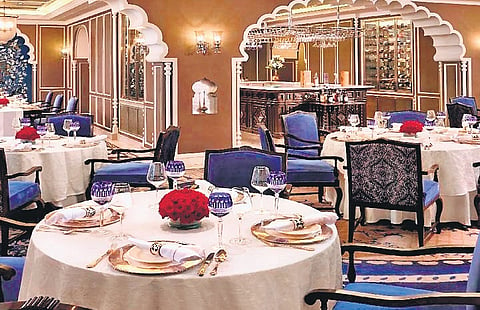
Qureshi began his career with Krishna Caterers, which fed jawans during the Indo-China war. He was known for his slow-cooking technique called the Dum Pukht; a restaurant of the same name was opened with much fanfare in the late ’80s in Delhi as part of ITC Hotels. His journey from Lucknow to Delhi is also an interesting tale. In 1962, CB Gupta, the then chief minister of United Provinces (now Uttar Pradesh) invited Jawaharlal Nehru, Indira Gandhi and Zakir Husain for a meal. Qureshi was handed the responsibility of preparing a vegetarian meal. Knowing only meat dishes, Qureshi curated an interesting vegetarian menu using the cooking concept he was most familiar with. His menu included a re-creation of meat dishes into vegetarian delights. In place of kebabs, kamal kakri shammi kebabs were served, and paneer pasanda replaced the traditional pasanda. Impressed with the food, Nehru hired Krishna Caterers for the opening of the Ashok Hotel in Delhi, leading to Qureshi’s shift to the national capital.

Destiny led him to the ITC hotel group in 1976. For Qureshi, cooking was supposed to be done in an old-school way, without fancy equipment and in copper vessels—the latter he introduced to the five-star hotel kitchen. Copper vessels were commonly used by Lucknow’s Khansamas for low-fire, slow cooking, and Qureshi, introduced his now-famous dum pukht technique from that learning. “Dum Pukht is an old technique, but it was Qureshi sahab who gave this technique the respect it deserves,” says author and chef Sadaf Hussain. Hussain first met Qureshi in 2019 during the Masterchef India shoot. He recalls discussing his book, Daastan-e-Dastarkhan: Stories and Recipes from Muslim Kitchens, with Qureshi. “He told me that one must document food and its history, and understand the community and ingredients the food comes from,” he says. “He told me that nowadays, we use words like ‘spicy food’, but that has no meaning because each spice has a different use and the colloquial terms explain its usage,” he says. For instance, ‘tez’ refers to pungent spices such as nutmeg, whereas ‘teekha’ refers to hot spices like chilli.
Qureshi as a teacher
“Chef Qureshi would always tell us that ingredients do not make your food tasty; skill to understand the ingredients is the important thing,” says Kapur. But he was “secretive in his teaching methods and would share his knowledge with you only if he saw the commitment in you. You had to show that you are hungry for the knowledge,” he says.
Qureshi raised Awadhi cuisine to a level that received global fame. Thanks to his efforts, India was recognised for its diverse culinary delights, beyond tandoori chicken and dal makhani. In 2016, he won a Padma Shri for his contributions to the culinary arts.“It would be correct to say that he made a lot of minds curious about travel, and about exploring the culinary beyond dal makhani,” says Kapur.
“When I started working as a chef, I was taunted for not having a management degree. And that is when I used to give everyone Chef Qureshi’s example. He is an inspiration to us all. Even without a formal degree, he became the foundation of Indian cuisine,” says Hussain.