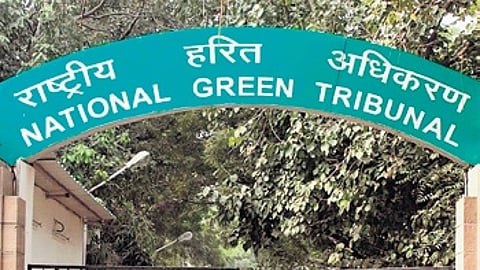

NEW DELHI: The National Green Tribunal (NGT) has initiated suo-motu proceedings following two critical studies that have revealed a disturbing decline in air quality across India.
A bench led by Chairperson Justice Prakash Shrivastava, along with judicial member Justice Arun Kumar Tyagi and expert member Dr A Senthil Vel, found that these studies raised serious concerns about environmental law violations.
The first study, published in Lancet Planetary Health, attributed approximately 33,000 annual deaths in 10 major Indian cities to air pollution.
The cities—Ahmedabad, Bengaluru, Chennai, Delhi, Hyderabad, Kolkata, Mumbai, Pune, Shimla, and Varanasi—are grappling with severe air quality deterioration due to vehicular emissions, industrial activities, and construction dust.
The study highlights how children and the elderly are especially vulnerable to fine particulate matter (PM2.5), which can also negatively impact fertility rates.
The NGT has issued notices to the Central Pollution Control Board (CPCB), the Ministry of Environment, Forest and Climate Change (MoEFCC), and various State Pollution Control Boards from the affected regions. A hearing is scheduled for October 23.
In a related development, the NGT also took cognizance of another study, this one from the Indian Institute of Technology (IIT), Delhi, which revealed high concentrations of heavy metals in PM2.5 particles in East Delhi, Ludhiana, and Panchkula.
The study underscores the long-term health risks posed by these pollutants, particularly to vulnerable groups, linking them to respiratory diseases, cardiovascular issues, and neurological disorders.
“The study reveals that approximately 33,000 deaths annually are linked to air pollution levels that exceed the World Health Organization (WHO) guidelines. The cities examined include Ahmedabad, Bengaluru, Chennai, Delhi, Hyderabad, Kolkata, Mumbai, Pune, Shimla, and Varanasi,” the bench noted.
The tribunal has demanded responses from the Delhi Pollution Control Committee (DPCC), the Punjab Pollution Control Board (PPCB), CPCB, MoEFCC, and district authorities. The case will be reviewed again on February 6, 2025.
