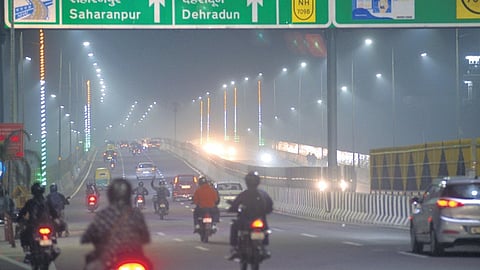

NEW DELHI: The much-awaited Delhi-Dehradun Expressway was opened for a trial run on Monday. Developed at an approximate cost of Rs 12,000 crore, the corridor will significantly reduce travel time between the capital and Dehradun—from the existing 6.5 hours to just 2.5 hours.
The access controlled expressway with operational speed limit of 100 kmph starts from Akshardham Temple in Delhi and passes through many districts of Uttar Pradesh such as Baghpat, Baraut, Muzaffarnagar, Shamli and Saharanpur and culminates at Dehradun.
The 210 km-long expressway was expected to be ready by March 2024. Speaking at the monthly interactive session Delhi Dialogues, organised by this newspaper, Minister of State for Road Transport and Highways Harsh Malhotra said last week that the remaining work on the project was almost complete and the expressway would be opened by the end of this month.
The project was approved in 2020, and Prime Minister Narendra Modi laid the foundation stone in December 2021.
The expressway will have a spur towards Haridwar and will also connect to the Char Dham Highway, enhancing connectivity to the hill stations and pilgrimage sites of Uttarakhand and Uttar Pradesh. The last 20 km of the corridor passes through the eco-sensitive zone of Rajaji National Park, where Asia’s longest elevated wildlife corridor (12 km) is being constructed, including the 340-metre Daat Kali tunnel.
Multiple animal passes have been provided in the Ganeshpur–Dehradun section to prevent animal-vehicle collisions. The corridor is also equipped with rainwater harvesting systems every 500 metres and more than 400 water recharge points.
The overall project completion is targeted for February 2026. The Ministry of Road Transport and Highways (MoRTH) plans to install solar panels along a 14.75 km stretch of the expressway, including a 6.9 km elevated section starting from the Akshardham junction (near the Delhi–Meerut Expressway) to DLF Ankur Vihar at the Delhi-Uttar Pradesh border.
