
NEW DELHI: The Rekha Gupta-led Delhi government has prepared the draft of EV Policy 2.0 and is likely to release it after a high-level meeting on Friday. The move aimed at accelerating the city’s shift towards electric mobility, Gupta is likely to release the draft to seek feedback from all stakeholders.
The Chief Minister on September 18 announced that the government was working on a new electric vehicle policy to turn all public transport vehicles electric by 2026-end.
According to sources, the EV Policy 2.0 is expected to roll out from the beginning of 2026 as the current one expires on December 31. The previous policy, introduced in August 2020 for three years, was extended multiple times but failed to create any impact. So, a committee was formed led by Cabinet Minister Ashish Sood.
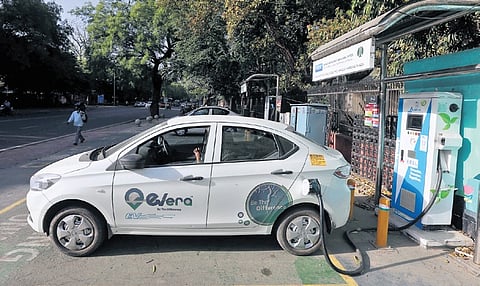
For the first time, Delhi plans to introduce a structured battery recycling chain involving organised collection, recycling processes and safe disposal mechanisms. The system will tackle the growing battery waste. The government has planned to expand EV charging network and will propose incentives to encourage vehicle owners to switch. Accessible and rapid charging is crucial in boosting EV adoption.
The government wants to offer up to 50% subsidy to accelerate EV conversion. A sizeable discount based on the vehicle’s market value will help transition to electric vehicles faster. However, the final approval of the subsidy structure will come from the cabinet. While an ‘EV Fund’ has been proposed, subsidies will not be the primary focus this time.
Data shows that most private and commercial EV buyers are no longer dependent on subsidies while choosing an electric vehicle. The government aims to install 5,000 public charging stations by 2030, with each offering 4–5 points. They will be set up at market complexes, multi-level parking zones, residential societies and RWAs, government buildings and offices, along with major roads.
The EV Policy 2.0 will propose a revamped last-mile connectivity. The government is considering introducing compact EV vans (7 passengers + driver), similar to the ‘Gramin Sewa’ model, to serve narrow residential colonies, busy market areas and zones around metro stations. A route-mapping plan for e-rickshaws has been proposed to ensure organised operations.
3 major areas
Battery recycling system
Expansion of charging infra
Up to 50% subsidy proposed
5K CHARGING STATIONS
Govt plans to install 5,000 public charging stations by 2030, with each offering 4–5 points at market places, parking zones, wesidential societies and RWAs
Last-mile connectivity
Govt plans to introduce compact EV vans (7 passengers & one driver), similar to the Gramin Sewa model, for congested residential and busy market areas and zones around metro stations
