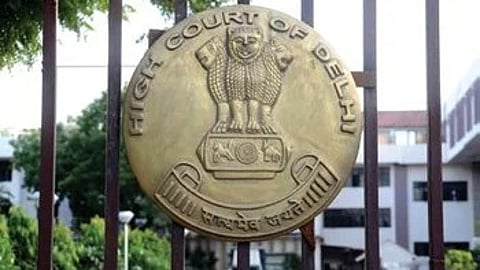

NEW DELHI: The Delhi High Court has held that the ‘Right to Privacy’, a fundamental right granted under the Constitution, is not absolute and must yield to legitimate State interests.
Justice Neena Bansal Krishna made the observation while holding that ordering a person to provide voice samples for comparison with intercepted phone calls does not violate their fundamental rights against self-incrimination granted under the Constitution.
The judge made the observation while dismissing a plea filed by controversial businessman Moin Akhtar Qureshi challenging a trial court order that had directed him to provide voice samples to the CBI for comparison with intercepted telephone conversations recorded in 2013–14. Qureshi had claimed that the order violated his right to privacy.
“The direction to provide a voice sample does not violate Article 20(3) of the Constitution as it does not constitute testimonial compulsion… While the Right to Privacy is a fundamental right, it is not absolute and must yield to legitimate State interests, such as the prevention and investigation of crime,” the judge said.
According to the petition, the case related to surveillance conducted by the Income Tax Department between October 2013 and March 2014, followed by searches at Qureshi’s premises in February 2014.
Based on intercepted calls and Blackberry Messenger communications, the Enforcement Directorate (ED) lodged a complaint, leading to the CBI registering an FIR in 2017 under provisions of the Indian Penal Code and the Prevention of Corruption Act. In his plea, Qureshi argued that the intercepted calls were “stale,” and inadmissible due to non-compliance with SC guidelines on telephone interception and the absence of mandatory certification under the Evidence Act.
Also in court
Court restrains Dr Reddy’s sunscreen
The Delhi HC restrained Dr Reddy’s Laboratories from manufacturing sunscreen products bearing the word “SUN” on labels, holding that its use appears trademark-like. Granting interim relief to Sun Pharma, the court ordered status quo, noting that “SUN” was given placement despite sunscreen being separately described on the product.
Akasa Air wins relief against scammers
The Delhi High Court restrained entities from impersonating Akasa Air and misusing its trademarks to run recruitment scams. Granting interim relief to SNV Aviation, the court barred use of Akasa-related marks, domains and emails. It held that demanding “process fees” from job seekers amounts to deception and passing off.
Influencer gets bail in `6 cr movie role fraud case
The Delhi High Court has granted bail to social media influencer Sandeepa Virk in a money laundering case linked to allegedly duping a woman of nearly `6 crore by promising a film role. Justice Swarana Kanta Sharma noted the case was filed a decade after the transactions and that nearly `2.7 crore was already returned. Virk, arrested in August 2025, was granted bail on a `2 lakh personal bond with two sureties. Proceedings in the predicate offence are pending as the main accused remains absconding.
