
As the Narendra Modi-led government completes 11 years at the Centre, the transformation of India’s infrastructure stands out as one of its defining achievements. At the heart of this growth is the Ministry of Road Transport and Highways (MoRTH).
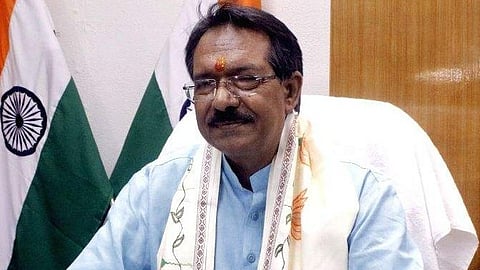
In an interview with Parvez Sultan, Union Minister of State for Road Transport and Highways Harsh Malhotra spoke about challenges, milestones, and the vision shaping India’s infrastructure journey.
Excerpts:
What are the key milestones in infrastructure development during Narendra Modi’s tenure as Prime Minister in the last 11 years?
India’s highway infrastructure has seen remarkable growth over the past 11 years. Before 2014, the country had 92,000 km of highways, with construction progressing at 12 km per day. Today, that pace has more than doubled to 28 km per day, and during COVID, it touched 34 km per day. Since 2014, 58,000 km of new highways have been built.
Under the PM Gram Sadak Yojana, aimed at connecting villages to cities, 3.5 lakh km of rural roads have been constructed. Every rupee spent on roads boosts GDP by 3.2 percent, and over the past five years, road infrastructure projects have generated 650 crore man-days of employment.
Major expressways such as the Delhi-Mumbai Corridor, Delhi-Amritsar-Katra, and the nearly complete Delhi-Dehradun Expressway are transforming travel; cutting the Delhi-Dehradun journey to just 2.5 hours. A spur from Saharanpur to Haridwar and bypasses for Rishikesh toward Kedarnath and Badrinath are also underway.
The government is building all-weather roads to the Char Dham and has completed a route to Kailash Mansarovar via Pithoragarh. Connectivity is also being strengthened to key religious cities—Ayodhya, Varanasi, Chitrakoot, and Prayagraj—with a major road underway between Ayodhya and Gorakhpur.
Why has the Char Dham all-weather connectivity project been delayed?
There is no delay in the Char Dham project. The region faces extreme weather and difficult terrain, with frequent rain, cloudbursts, and landslides. Roads are built but often get damaged due to natural calamities. Despite these challenges, work is progressing continuously. Wherever damage occurs, repairs are promptly undertaken, and durable concrete roads are being constructed to withstand future disruptions.
How much time can we expect for the project to start or complete?
The work is still ongoing. We are also working on widening the existing highway. We expect it to be completed within the next 1 to 1.5 years.
Quality of road construction has improved, but maintenance of highways is still an issue.
Our highways are of world-class quality and built to handle heavy traffic volumes. Each contractor is responsible for maintaining the road for at least five years, and in some cases, up to 15 years, with regular monitoring in place.
While newly constructed roads may face initial challenges such as soil displacement due to rain, landslides, or ongoing work, our teams ensure prompt manual maintenance to keep them safe and functional.
What is the ministry doing to address environmental concerns?
We take great care to minimise environmental impact during road construction. Our priority is to avoid cutting trees as much as possible. When tree removal becomes unavoidable, we compensate by planting at least 10 new trees for every one that is cut, ensuring ecological balance in the area.
Moreover, we are increasingly relying on tree transplantation rather than felling. In fact, 70–80 percent of the trees are being transplanted instead of cut down. Encouragingly, the survival rate of these transplanted trees is over 80 percent, which reflects the effectiveness of our approach and our commitment to sustainable development.
Despite efforts and measures for improving travel experience, higher rates of road accidents and fatalities remain a concern. What extra push does it need to make road travel safer in the country?
While our road infrastructure is improving rapidly, the number of fatalities on roads remains a serious concern. In the current year alone, there have been around three lakh accidents, resulting in approximately 1.8 lakh deaths. This is deeply unfortunate and underscores the urgent need for both systemic and behavioural change.
Public cooperation is essential. People must follow traffic laws—wearing helmets, using seat belts, and adhering to speed limits. Road safety is a shared responsibility.
From our side, we are actively working to reduce accidents by identifying and eliminating ‘black spots’—those dangerous points on highways where the road design itself contributes to accidents. Wherever sharp curves or design flaws are identified, corrective measures are undertaken. Enforcement of traffic rules remains a key priority. Strong and consistent enforcement helps significantly reduce accidents.
Additionally, we have implemented a pilot project in seven states focusing on the ‘Golden Hour’—the critical first hour after an accident. Ambulances have been stationed at toll plazas to ensure an immediate response. Victims are transported to nearby hospitals, and the government bears the cost of their treatment up to Rs 1.5 lakh for the first seven days.
The National Highways Authority of India's (NHAI) debt has been high in recent years due to heavy borrowing for highway development. What are the plans to handle this financial crisis?
There is no financial crisis and no shortage of funds. As Nitin Gadkari ji has reiterated multiple times, we are investing more than Rs three lakh crore annually in road infrastructure. Public funds are being invested wisely into road development, and major roads are being monetised under structured concession agreements. This allows the government to use its resources for other critical projects while ensuring that roads remain in top condition.
Since you are from Delhi, are there specific plans to improve the travelling experience in Delhi and NCR?
We have developed a comprehensive decongestion plan for Delhi. Over the past 11 years, major projects such as the Delhi–Meerut Expressway and the Dwarka Expressway have been completed. The Delhi–Dehradun Expressway is in its final stage and will soon be operational.
To address the 30–45-minute traffic jams from Manesar to Delhi, a five-km tunnel from Shiv Murti to Nelson Mandela Marg has been sanctioned at a cost of Rs 3,500 crore. To divert non-Delhi traffic, we are extending the Urban Extension Road (UER) from Alipur to Tronica City, easing movement from Sonepat to Dehradun.
From Tronica City to Ghaziabad, commuters from Dehradun will be able to reach Noida without entering Delhi. A dedicated link will connect Ghaziabad to Noida and further extend to Faridabad and the Delhi–Mumbai Expressway.
These corridors will form an interconnected network, including the Amritsar–Katra–Delhi Expressway, with extensions to the airport via UER and Dwarka Expressway. This will enable vehicles to reach the airport through the Eastern Peripheral Expressway, bypassing central Delhi entirely.
Additionally, to ease congestion at Kalindi Kunj, where traffic from multiple zones merges, a DPR is being prepared to make the Kalindi Kunj–Noida stretch signal-free and seamlessly connected to the Delhi–Mumbai Expressway.
What are the reasons for the delay in the Delhi–Dehradun Expressway project?
The project is nearly complete. In Uttar Pradesh, a key challenge was constructing pillars in the middle of a large canal that carries both drinking and irrigation water. This required official permission to temporarily stop the water flow. Once the flow was halted, pillar construction began, and that phase of the work is now underway. I believe that within the next two to three months, the Dehradun stretch will be ready for public use.
