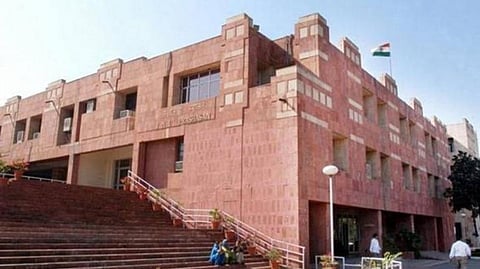

NEW DELHI: Jawaharlal Nehru University (JNU) will soon host two dedicated centres to promote Marathi culture, language, and heritage. One centre will honour the legacy of Maratha warrior king Chhatrapati Shivaji Maharaj, focusing on Maratha history, governance, and military strategy.
The second centre will be named after renowned Marathi poet and writer Kusumagraj, aimed at advancing the study of Marathi as a classical language and conducting research in Marathi literature and linguistics. The two centres were inaugurated on Thursday by Maharashtra Chief Minister Devendra Fadnavis and his two deputy chief ministers.
Maharashtra’s Minister for Marathi Language, Uday Samant, told the media that the initiative seeks to offer students from across India a deeper understanding of Maharashtra’s rich cultural and linguistic heritage. He added that JNU has agreed to allocate land on its campus for the centres, with plans to install a statue of Shivaji Maharaj.
Samant also revealed that the state government had granted `2 crore 16 years ago for a Marathi Centre of Excellence at JNU, but an additional `3 crore was required to complete the project.
He promptly approved the additional funding and insisted that the centre be named after Kusumagraj. In addressing India’s linguistic diversity, professor Pandit highlighted the importance of prioritising one’s mother tongue while also learning regional and career-related languages.
This comes amidst rising tensions in Maharashtra over the promotion of Marathi, particularly in Mumbai. JNU is also working to introduce Marathi at the Master’s level and offer certificate courses for non-Hindi speakers, alongside translating prominent Marathi literary works into other Indian languages, the professor added.
