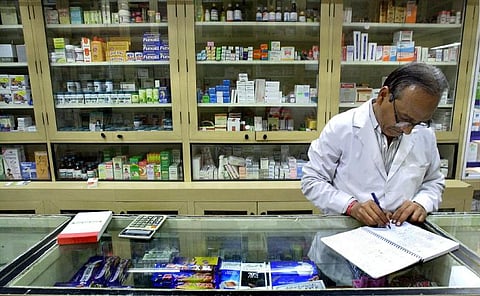

NEW DELHI: In wake of a recent bust of a large consignment of fake medicines, the Delhi government has directed all pharmacies across the capital to install CCTV cameras at their retail outlets and godowns and to strictly document the sale of sensitive prescription drugs.
Officials said CCTV footage would be used not only to monitor daily operations at pharmacies but also to assist in investigations if cases of drug abuse, diversion, or counterfeiting are detected. Directions were issued by the Health and Family Welfare Department and subsequently circulated to all chemist associations in the city. Officials said the aim is to bring greater transparency and control over the sale of medicines that are often diverted for recreational use or sold without proper prescriptions.
Officials said that despite repeated warnings and inspections in the past, a large number of retail and wholesale medical shops have failed to comply with earlier advisories to enhance surveillance at their premises. According to the Drugs Control Department, there are over 16,000 retail and 14,000 wholesale chemist shops in Delhi, many of which had been asked to install CCTV systems but had not done so. Authorities say that the move is part of a broader strategy to increase surveillance of counterfeit and substandard drugs circulating in the market.
“Specific concerns are over the reports of undocumented sale of Schedule H and H-1 medicines including antibiotics, sedatives and antidepressants. Drugs under these categories are potent psychotropic substances which are addictive in nature and illegally obtained by drug abusers,” an official said.
The Drugs Control Department, working in coordination with the Narcotics Control Bureau (NCB) and the Delhi Commission for Protection of Child Rights (DCPCR), has now been tasked with ensuring that surveillance mechanisms are in place across the city. As part of a joint action plan, pharmacies will be required to maintain detailed records of the sale of such medicines, including prescriptions and full addresses of buyers, to help trace any misuse.
In June, the Drugs Control Department executed a citywide operation where over 160 samples of suspected cancer medications were seized—many lacked proper documentation or bore suspicious markings.
