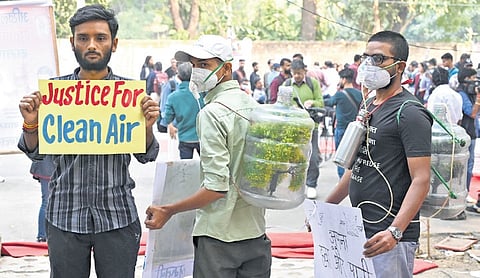

NEW DELHI: Delhi is currently facing a sharp spike in health hazards as toxic smog blankets the capital, prompting continuous warnings from doctors about the long-term consequences of exposure. While those with chronic conditions like Chronic Obstructive Pulmonary Disease (COPD) and the elderly remain highly vulnerable, the adverse effects are now observed across all age groups and medical backgrounds.
The severity of the crisis was evident at the recent anti-pollution protests at Jantar Mantar, where students reported increasing difficulty in breathing. A Delhi University student shared her experience, stating, “I struggle to breathe even after walking up a few steps these days. Nowadays, it’s not just the elders in our family who face the brunt of poor respiratory health, it now includes us youngsters as well.”
Pulmonologists confirm a definite flare-up in respiratory illnesses, attributing it to a combination of severe pollution and seasonal change. The constant exposure to air pollutants is noted to be dropping people’s immune power, thereby increasing susceptibility to various diseases. Speaking to this newspaper on the matter, Dr Akshay Budhraja, Senior Consultant & HOD – Respiratory & Sleep Medicine, Aakash Healthcare, identified three primary affected groups: toddlers/school students, college-goers and senior citizens. He noted that young patients most commonly report persistent coughing, particularly at night and breathing difficulties.
Beyond respiratory issues, experts are warning of broader health impacts. Dr Nitin Rathi, Senior Consultant Pulmonologist at Dharamshila Narayana Hospital, pointed out that pollution increases the risk of psychosomatic disorders like depression and anxiety, as well as common symptoms like eye irritation. More alarmingly, Dr Rathi cautioned against severe cardiac and neurological risks. “Due to the pollution, there are high chances of heart attack, cardiac-related issues and the CBA [Cerebrovascular Accident] like paralysis,” he said. He emphasised that pollution is not merely worsening respiratory issues but is detrimental to “every part of the body.”
