
NEW DELHI: India is set to witness the inaugural run of its first bullet train in August 2027, operating between Surat and Vapi in Gujarat. The initial stretch will cover 100 km and will gradually be expanded to the full 508 km route once the high-speed rail corridor between Sabarmati (Ahmedabad) and Mumbai is completed by 2029, Railway Minister Ashwini Vaishnaw said on Tuesday.
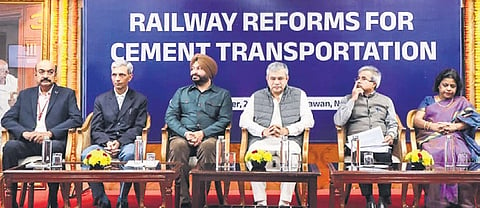
Speaking to the media after launching the rationalisation of bulk cement rates and the policy for bulk cement terminals at Rail Bhawan, Vaishnaw said, “A significant milestone is that the bullet train will cover the distance between Ahmedabad and Mumbai in just 1 hour 58 minutes upon the completion of the high-speed rail corridor. The inaugural run in August 2027 will cover 100 km between Surat and Vapi.”
On the 508 km corridor, trains will run at speeds of up to 320 kmph, completing the full route in 1 hour 58 minutes with four stops. “The bullet train will cover the distance between Mumbai and Ahmedabad in 1 hour 58 minutes with four stops. However, if it halts at all 12 stations, the total journey time will be 2 hours 17 minutes,” Vaishnaw said, adding that the entire network will be ready by December 2029.
Asked whether the inaugural run would feature a Japanese-built or an indigenous train, the minister did not specify but reiterated the deadline: “We will cover the first 100 km in August 2027.” He noted that PM Narendra Modi, during a recent review in Surat, was satisfied with the pace of work. “PM Modi said that whatever innovations we have made in this project should be applied elsewhere—not only in railways and other high-speed projects but in various sectors,” he added.
Vaishnaw said the bullet train project has been complex, with several design challenges, but Indian Railways has addressed them through multiple innovations. The Shinkansen model, known for reliability and suitability for Indian conditions, is likely to be used. The minister also announced the introduction of specialised containers for transporting bulk cement to prevent dust pollution.
