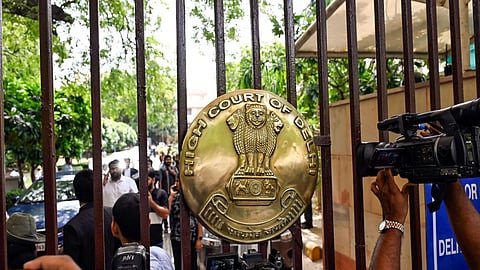

NEW DELHI: The Delhi High Court has ruled that the Directorate of Education (DoE) can regulate the fee structure of unaided private schools only to prevent profiteering, commercialization of education, and the collection of capitation fees — not to impose across-the-board restrictions.
A division bench of Chief Justice DK Upadhyaya and Justice Tushar Rao Gedela clarified that the government’s authority over private school fees is limited to ensuring fairness and transparency, and does not extend to dictating or freezing fee hikes.
“It is not that the fees be charged by the schools cannot be regulated by the Government; however, regulation is permitted only to ensure that such schools do not indulge in profiteering or commercialisation of education or charging capitation fee,” the Court said.
The bench observed that any government oversight must remain confined to preventing misuse of funds or unethical practices. “The regulatory measures which can be adopted by the Government would also encompass the measures to check that unaided schools do not utilize the profits or surplus for a purpose other than for the benefit of educational institution,” the judges added.
The Court further noted that a school’s fee structure must consider its infrastructure, staff salaries, facilities, and future development plans. It dismissed a batch of appeals filed by the DoE and some students challenging an earlier single-judge order that had quashed government directions preventing Bluebells International School and Lilawati Vidya Mandir from raising fees for the 2017–18 session.
Agreeing with the judge’s reasoning, the bench reiterated that the DoE’s interference in unaided schools’ fee decisions is warranted only when a school “engages in charging of capitation fee or indulges in profiteering.”
“Accordingly, if on examination of the statement of fees to be filed by the schools, the DoE finds that the spending of the amount collected by the schools is not as per the provisions of DSEA, 1973, appropriate action is permissible,” the Court held, adding that such steps should ensure profits are used solely “for betterment of the school and for purposes related to education.”
