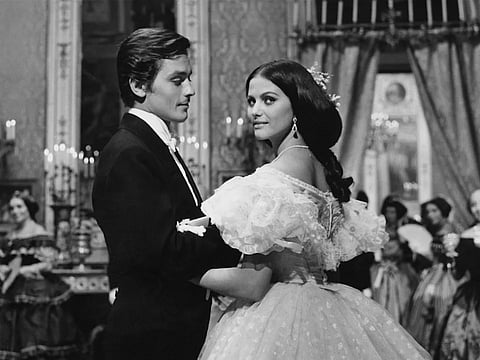

Claudia Cardinale, a star of Italian Neo-Realist cinema, had less purr than Sophia Loren, less sauce than Gina Lollobrigida, but had more girl-next-door charm than both of them put together.
She was just of a different mould. She was more likely what the Italian boy on screen would take home to his Italian mamma, and with her nod, get her to drive pillion on his scooty all over Rome. However, she could also play a post-war European glamour girl.
Cardinale, who had been living in Nemours, south of Paris, died at age 87 on September 23. The leading ladies of films by Italian masters of the 1960s and the 1970s, Luchino Visconti (The Leopard, Sandra, Rocco and His Brothers), Federico Fellini (8½) and Sergio Leone (Once Upon a Time in the West), and other great European auteurs such as Werner Herzog (Fitzcarraldo), she had headlined more than 150 films in her six-decade career in Europe.
Hollywood, too, came calling -- she is remembered for the comedy classic The Pink Panther, in which she played a princess with a jewel, whom the thief-hero (David Niven) is after. Cardinale, reportedly, loved Niven’s observation about her—“along with spaghetti, Claudia, you're Italy's greatest invention”.

The matinee idols of cinema, Jean-Paul Belmondo, Marcello Mastroianni, Rock Hudson, Alain Delon, Burt Lancaster were her co-stars—though in most of their films, her screen time wasn’t much. But she registered, she had presence, and she had range, playing prostitute, a con woman, a woman in an incestuous relationship, and every kind of romantic woman.
Cardinale also held her own in the age of Loren, Anita Ekberg and Brigitte Bardot. If beauty is one of the highest of romantic ideals, Cardinale played women who seemed attainable. She was Everyman's sweetheart.
She was also a director’s actor. While simultaneously shooting Fellini’s 81/2 and Visconti’s classic The Leopard simultaneously, Cardinale dyed her hair brunette for Visconti, and for Fellini, she dyed it again -- blonde.
Visconti taught her to be beautiful before the camera, with mystery. One of the films where this is very evident is Sandra, a re-working of the Greek story of Electra and Orestes, a sister-brother duo driven by anger and revenge. Sandra’s return to the family villa, where ancient family secrets lie suppressed, is played by Cardinale with Gothic gloom and an animal-like menace.
On her passing, her agent Laurent Savry told AFP: “She leaves us the legacy of a free and inspired woman, both as a woman and as an artiste.”