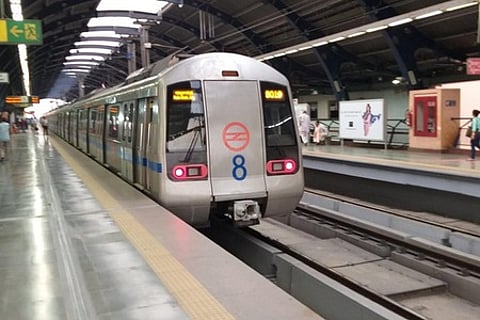

NEW DELHI: As Delhi is hosting a major artificial intelligence summit this week, the city’s own mass transit system is emerging as a practical example of how AI is being deployed in everyday public services.
The Delhi Metro Rail Corporation (DMRC) has integrated AI across customer service, safety, and operations, quietly transforming the daily commute of millions.
One of DMRC’s most visible AI tools is CHETNA, its AI-powered virtual assistant. Built on large language models, the chatbot allows commuters to ask questions in natural language rather than rigid commands. A user can type, “I am at CP and want to go to Gurgaon,” and the system identifies nearby stations and suggests routes without requiring exact station names.
CHETNA supports multiple languages and voice interaction, widening access for non-English-speaking and less tech-savvy users. It also provides real-time information on fares, routes and train schedules while correcting spelling mistakes through contextual intelligence.
DMRC’s principal executive director, Anuj Dayal, said, “AI is playing a role in easing congestion and improving passenger comfort.”
This is why we say we are not just moving trains. We are instead becoming a customer’s delight. DMRC has deployed systems that display real-time occupancy data of incoming trains on platform screens.
On some lines, this is calculated using load cell measurements that estimate coach crowding based on weight, while on others, AI-enabled video analytics count passengers through CCTV footage. The information allows commuters to move towards less crowded coaches, helping distribute passenger load and reduce peak-hour pressure.”
Talking about the area of security, Dayal said that the DMRC has shifted from reactive surveillance to proactive monitoring. “Intelligent video analytics now scan thousands of CCTV feeds to detect overcrowding on platforms and alert station controllers when crowd density crosses safe limits. The system also flags intrusions in restricted areas such as tracks or yellow-line crossings, enabling quick intervention by staff,” he added.
AI is further being used for identifying abandoned objects in busy stations. Unattended baggage is automatically detected, and security personnel are alerted to possible threats. At security checkpoints, DMRC is upgrading its X-ray baggage inspection systems with AI-enabled scanners that can classify suspicious items such as weapons or explosives, reducing reliance on human judgement alone and minimising the chances of oversight.
Beyond travel and safety, AI-driven systems are being embedded into the Metro’s digital services. The DMRC app now offers features such as smart parking availability, digital payments, locker rentals and station-based shopping, turning the metro platform into a broader urban mobility and lifestyle service.
Talking about the future plans in terms of AI introduction, Dayal shared, “DMRC is working on introducing agentic AI in customer grievance handling, which would allow systems to understand complaints, take action and update passengers without human intervention. A Data Centre of Excellence is also being planned to centralise operational data and use analytics for policy and resource planning.”
