
NEW DELHI: Since Rekha Gupta assumed office as Chief Minister in February this year, the Delhi government has renewed its focus on strengthening service delivery across the capital.
The administration has emphasised decentralisation, improved citizen access, digital integration and faster grievance redressal to create a more responsive governance framework.
A major push has come through the 2025–26 Delhi Budget, which crossed Rs 1 lakh crore for the first time. The budget prioritised improvements in health, sanitation, infrastructure, education, welfare schemes, and citizen support systems, with service delivery positioned as a central policy objective.
However, several key welfare promises remain pending. The Mahila Samriddhi Scheme, announced on March 8 on International Women’s Day, is yet to be rolled out. The scheme proposes a monthly assistance of Rs 2,500 to eligible women from economically weaker sections. Despite then BJP president J P Nadda announcing a Rs 5,100 crore allocation, the rollout has been delayed, with implementation now expected in 2026.
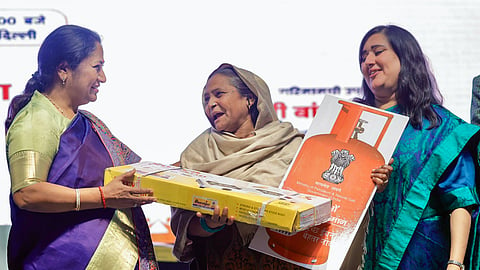
Similarly, the promise of free and subsidised LPG cylinders for women from underprivileged families is awaiting execution. Officials said the beneficiary database is still being prepared, and the scheme is likely to be launched next year. The Rekha Gupta government has completed 10 months in office. Among the structural reforms is the plan to establish “mini-secretariats” in all 13 revenue districts. The government has reorganised 11 districts into 13 to reduce jurisdictional overlap and improve access to services.
The mini-secretariats will bring revenue services, registrations, certificates, welfare schemes, and grievance handling under one roof.
Digital governance has also been strengthened through an upgraded online grievance portal, physical complaint boxes at district offices, and proposed WhatsApp- and app-based complaint systems. All grievances are monitored by the Chief Minister’s Office. Initiatives such as “MLA on Wheels– Rekha Sarkar Aapke Dwar” and Janata Darbars aim to take governance closer to citizens, particularly benefiting women, senior citizens and persons with disabilities.
Health as cornerstone of welfare goals
The government continues to hold Janata Darbars at multiple levels. In mid-2025, the CM inaugurated the Jan Seva Sadan in Civil Lines as a dedicated venue for public hearings in an attempt to engage its support base directly. Expansion of healthcare services through two flagship schemes, Ayushman Arogya Mandirs and Jan Aushadhi Kendras, shows the BJP government will continue to match the previous AAP government scheme by scheme.
