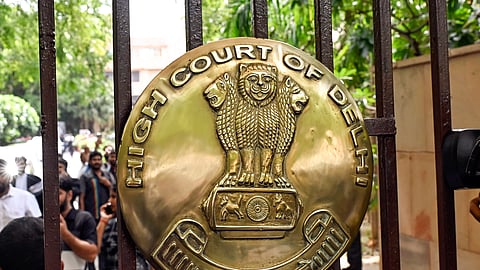

NEW DELHI: The Delhi High Court has held that the right to pursue higher or professional education, even though not a fundamental right under the Constitution, cannot be permitted to be curtailed lightly.
Justice Jasmeet Singh made the observation while directing the authorities concerned to permit a student, whose admission to a medical college was cancelled over allegations of being involved in a criminal case, to continue his MBBS classes.
The judge passed the order after noting the submission of the CBI, which informed the court that the petitioner was not an accused but only a witness in the criminal case being probed by the agency in relation to the allegations of leakage of the NEET-UG 2024 question paper.
“The right to pursue higher or professional education even though not explicitly spelt out as a fundamental right in part III of the Constitution of India, it is an affirmative obligation on the part of the State to ensure this right and the same cannot be permitted to be curtailed lightly,” the judge said.
In a January 7 judgment, the judge noted that there could not be any prima facie findings of the petitioner committing any malpractice. The court added that the “valuable right” gained by the petitioner after he cleared the entrance exam -- NEET-UG -- needed to be protected.
The court said the cancellation of his admission and removal of his name from the MBBS course “disrupted his academic progress on totally unjustifiable grounds”. The judge held that the student secured admission on merit by participating in an open entrance and it can be cancelled only “on valid, genuine, and compelling reasons”.
During the hearing, the CBI told the court that 22 candidates were identified for their involvement in various malpractices, however, the petitioner was not one of them. He was named as a witness in the chargesheet, the CBI said.
CBI probing allegations of question paper leak
The CBI said it was investigating allegations of leakage of the NEET-UG 2024 question paper. The investigation agency informed that although it had identified 22 candidates for their involvement in various malpractices, the petitioner was not an accused in the chargesheet but only a witness.