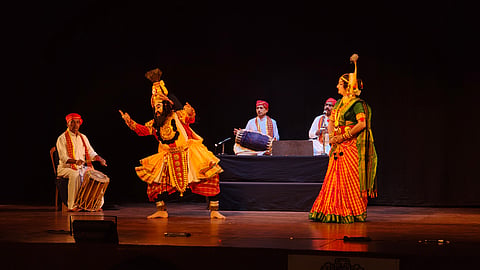

NEW DELHI: The chills of Delhi winter found warmth and vibrance as Kamani Auditorium brought to life classical traditions through new choreographic visions rooted in Indian civilisational values. The shawl-clad audience braved the dipping temperatures as loyal connoisseurs of art on the second day of the Festival of New Choreographies–KalaYatra 2026 curated by Padma Vibhushan awardee Sonal Mansingh.
The festival echoed the cultural diversity of the nation with authentic retellings of epic tales. Be it Yakshagana, a dance drama from Karnataka, or Mohiniyattam from Kerala, the festival reaffirmed the distinctive identity of all.
Professor Deepti Omchery Bhalla’s choreography in Mohiniyattam eulogised Goddess Saraswati for her unparalleled beauty. Her power as the eliminator of evil was personified through the seven sacred musical notes. Mohiniyattam, which literally translates to ‘the dance of the enchantress’, typically uses Shingara (love), Bhakti (devotion), and Karuna (sadness) in the performance. Bhalla’s choreography began with a benediction to Lord Shiva.
Each of the seven verses was set based on the seven ragas and seven Kerala Talas (rhythmic patterns). It ended with a bow to the goddess, with the Uth dancers claiming agency over the stage in the traditional white and golden attire. Directed by Guru Keremane Shivananda Hegde, the closing performance was ‘Girija Kalyana’ (marriage of Parvati and Lord Shiva)—a Yakshagana performance.
Fest to host 10 dance forms from 7 states
Presenting 10 dance forms from seven states, the festival will reach its last leg on January 29, designed to celebrate creative reinvention of the myriad facets of dance, music, choreography and visual aesthetics, transcending boundaries of land and language.
