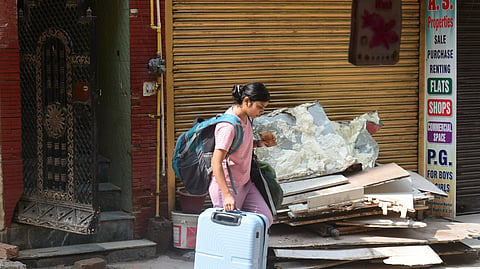

NEW DELHI: Before it became just a pile of concrete and twisted metal, the Satya Niketan building looked like any other crowded student accommodation in one of Delhi’s busiest neighbourhoods. A viral photograph of the structure, taken before the collapse, has since left former residents recognising it not just a building but a place that once formed part of their college lives.
For several Delhi University alumni who lived in Satya Niketan during their graduation, the tragedy brought back memories of cramped “cabins”, shared rooms and the constant struggle to find affordable accommodation close to campus such that the transport fee can be avoided.
On social media, some recalled staying in rooms where three beds were squeezed into spaces barely large enough for them, paying Rs 16,000-17,000 for a room. Others spoke of tiny cabinet-like spaces converted into accommodation, where students had little choice but to adjust because the alternative was a long and expensive daily commute.
For former residents, the images have made the tragedy painfully personal. One DU alumna recalled that the owner of the
collapsed building was related to the family that ran the PG where she had once stayed. She described living in a PG with around 40 students and questioned the continued addition of floors and rooms in properties catering to students.
Another former resident said the viral video initially looked like footage of the PG where she had lived, just two buildings away from the collapsed structure. The tragedy, she said, exposed a much larger problem around DU; colleges continue to expand their intake, but hostel capacity does not keep pace.
Students are consequently pushed towards private PGs, where rents rise with demand and space is often created by adding floors rather than improving existing structures.
For alumni who once called Satya Niketan home, said, “The building that collapsed is now a stark reminder of how easily the familiar thing can become frightening and how the search for a room near college can sometimes come with risks students have little choice but to accept.”
