
HYDERABAD: When you hear ‘Sankranti’, what is the first image that captures your mind? Kites, colourful muggus (rangolis), and of course, all the delicious dishes! On this beautiful festival, we gather with our loved ones, honour the harvest, and relish an array of mouthwatering treats.
“Makar Sankranti is one of the biggest festivals in south India and is celebrated as a harvest festival to mark the sun’s move towards the northern hemisphere, signalling the end of winter in the southern regions,” says Chef Chalapathi Rao, partner and cuisine designer at Simply South.
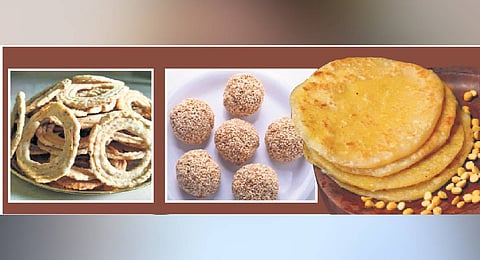
Ariselu, Sakinalu, Bobbatlu, and Nuvvula laddu are just a few of the must-haves during Sankranti. “Ariselu is mainly prepared during Sankranti from the first harvest. It is made with soaked rice, jaggery, ghee and oil,” explains Penmetsa Usha and Datla Rajeshwari, owners of Baanali, a place that brings traditional Telugu home foods alive.
“The Sakinalu snack is prepared across Telangana, preserving its authentic taste in every bite. Made with rice flour and seasoned with sesame seeds, this crispy snack is high on taste, leaving you wanting more,” they add.
Sesame, or til, holds a special place in Sankranti recipes. Beyond its culinary uses, it’s steeped in symbolism and tradition. “Sesame is also called the ‘seed of immortality’ as it has been blessed by Lord Yama and this is the biggest daan that anyone can give to others. It is also considered a symbol of abundance and prosperity. It is a source of solar energy and so, it is associated with Lord Surya, who symbolises Sankranti,” Usha notes.
The star of many Sankranti feasts is Pongal, a dish made with freshly harvested rice. “It’s a harvest festival. So, they make the Chakkara Pongali or the savoury Pongal using the new rice — so, it has a cultural significance. Not only that, during the Makar Sankranti festival, they thank God for the bountiful yield from what the farmers have sowed and expect that the future crops will also be as bountiful,” adds Chef Rao.
However, with the shift from joint families to nuclear setups, some traditions have evolved. “In the past, the entire family would come together to prepare sweets and snacks for the festival, but now nuclear families find it harder to do so and as a result, many people head to retail shops to pick up sweets, savouries, and other items needed for Sankranti, making local markets an important part of the celebrations,” Chef Rao recalls.

Health is another layer to these festive recipes. Til laddus are packed with nutrients, offering energy, improving digestion, and balancing cholesterol. Similarly, Sakinalu is gluten-free, rich in protein, and rich in healthy fats. “These traditional recipes were ahead of their time; they’re not just delicious but also incredibly wholesome,” Rajeshwari says.
Even in today’s fast-paced world, Sankranti dishes have managed to hold their ground. “Traditional sweets and snacks are so deeply rooted in our culture that they can’t be replaced.They’re tied to our identity and carry a legacy that’s passed down generations, and the ingredients that are used to make these dishes like til, jaggery, and rice are all warming and perfect for winter,” Chef Rao expresses.
As families celebrate Sankranti, the air fills with the delicious aroma of freshly made sweets and snacks, evoking a deep sense of nostalgia and togetherness. When you take a bite of Ariselu or crunch into Sakinalu, it’s more than just enjoying a treat — it’s about being a part of a tradition that connects the past, present, and future in every flavourful bite.