
It all began with a feeling; that something was missing. Every time Drishti Chhabria, the founder and chief experience officer at Orangetheory Fitness India visited Mumbai from the US, where she grew up, she’d find herself scanning the city for a workout space that felt familiar, structured, and motivating. But it was never quite there. “I actually grew up in America and used to work out at Orangetheory there. I loved the workout so much that I really felt like I wanted to bring it to India because nothing like that exists here. I tried traditional gyms in India but they never felt the same, the vibe and atmosphere were just different,” she says.
Orangetheory Fitness is a place that didn’t just change how Drishti trained, but how she saw fitness altogether. With a deeply personal health journey shaped by struggles with thyroid and PCOS, she had long been aware of the pressure so many women carry when it comes to appearance. “I just felt like so much of the conversation, especially as women, is about how we look or how others see us, and we forget that the real point of fitness is to improve our health. It is not just about looks because true fitness comes from within. I wanted to change the narrative in India about how we see fitness, which is why I felt inspired to bring Orangetheory Fitness here,” she explains.
And that’s exactly what she set out to do. What began with three studios in Mumbai has now expanded to Hyderabad, with Orangetheory Fitness opening its doors in Banjara Hills. The location wasn’t a coincidence. “We wanted to grow organically instead of franchising the brand. Banjara Hills has an openness to explore new ways of working out and new formats,” she narrates.
But the expansion also came with its challenges, Drishti expresses, “The Indian market has very low penetration because not everyone works out or prioritises fitness. In Hyderabad too, the number of people working out in a given area is low compared to other cities or countries. A lot of people still follow old methods like going for a walk and do not understand the benefits of strength or cardiovascular training. So educating the market is a big challenge. Also, Hyderabad is more price sensitive than Mumbai, so getting people to invest in fitness was tough too.”
At the heart of Orangetheory’s success is a science-backed format that uses real-time data to guide your workout. “In regular fitness studios, it really depends on the trainer, and that can vary a lot. At Orangetheory Fitness, while we do have great trainers, our workouts are actually created by an advisory board made up of exercise physiologists, physiotherapists, trainers and doctors. The workouts are tested before being rolled out. We also use heart rate-based training with monitors so members can track progress and train effectively. And our coaches are triple certified, which makes our approach more professional, consistent and results-driven,” the founder explains.

What’s especially powerful is that it’s built for everyone. “The beauty of it is that it’s such a beautiful product for all age groups because it’s so versatile. So even though you’re in a group fitness setting, you still personalise it. You get that community feel and social support, but the heart rate monitor makes it your own. Someone who is 60-plus can work out beside someone who’s 21, both doing the same workout at their own level. You can scale it up or down. Our coaches offer options like power walking, jogging or running, depending on your experience and goals,” Drishti says.
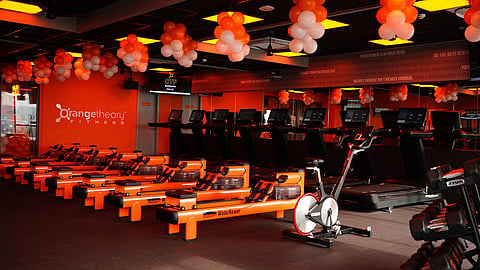
First-timers go through a complete orientation; from an in-body scan and fitness goal analysis to equipment demos; before stepping into the one-hour Orange 60 class, she notes, “The first class combines strength training and cardio endurance. You use a treadmill, a water rower, and different strength and resistance training equipment like dumbbells, TRX, and a bosu ball. After the workout, the coach goes over your heart rate and performance summary and explains how your session went. Based on that first class, the coach guides you on where your fitness level stands and where you want to be. Then we customise your plan.”
Beyond the physical, Orangetheory has also become a safe space for mental wellbeing. “I like to call Orangetheory ‘my orange therapy’ and a lot of our members say the same. It helps with mental health because the endorphins boost after each workout makes you feel really good. Staying consistent helps reduce stress and feelings of anxiety or depression, which are so common now,” she narrates.
As for what’s next, Drishti wants to grow; slowly and intentionally, “I think our future plans are to just grow very organically. We will probably grow to around 10 or 15 locations ourselves before deciding to franchise the product. We believe in not losing the quality, so we never want to rush growth and sacrifice the product, service or overall experience.”