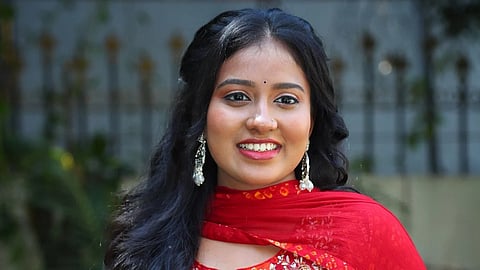

Some songs fade with time, but a few become emotions that live forever. Amma Paata is one such melody, a tender whisper from a daughter’s heart to every mother’s soul. What began as a quiet tribute during the lockdown has now blossomed into a phenomenon, crossing 100 million views and touching countless hearts. To celebrate this milestone, singer Janhavi Shankar hosted a warm, music-filled evening in Hyderabad. In a conversation with CE, she opened up about the song, her musical journey, and what lies ahead.
Excerpts
What was the core inspiration or memory behind creating Amma Paata?
Amma Paata was born straight from my heart. The song is my way of expressing gratitude for the first and most selfless love we all experience — a mother’s love. I sang it during a time when I was reflecting on everything my mother has done quietly, without expecting anything in return. The emotions just poured out naturally — the lullabies, the small sacrifices, the warmth of her touch. It’s not just my story; it’s every child’s story. That’s why I think people have connected to it so deeply — it’s universal, it’s home.
When did your journey with music truly begin?
Music was always around me growing up. But the defining moment came in childhood when I would sing the Hindi song Kaanta Laga while eating — my parents still joke that I wouldn’t eat unless it was played or sung! It wasn’t just about the song; it was the realisation of what music meant to me. That’s when I knew this wasn’t just a memory or a hobby, it was my calling.
How did the mentorship under Padma Bhushan Ustad Ghulam Mustafa Khan shape your artistry?
Training under Ustad Ghulam Mustafa Khan Saab was a blessing. He didn’t just teach me how to sing, he taught me how to feel music. His focus on riyaz, humility, and purity of sur has become my lifelong foundation. His guidance shaped my discipline, and his faith in me gave me the courage to experiment and find my own voice.
What kept your passion alive from childhood to becoming a successful independent artiste?
For me, music has always been more than a career — it’s therapy, it’s companionship. Even in low phases, I found solace in singing or just humming to myself. My family’s support and the love from listeners have also been huge motivators. Consistency comes when you truly love what you do, you stop chasing validation and start chasing growth. That’s what’s kept me going.
How did you develop the versatility of singing in multiple languages?
Language, to me, is just another form of melody. Each one carries its own rhythm, emotion, and cultural depth. I love experimenting and listening to music in different languages, fascinated by how emotions sound unique in each. Singing in multiple languages has expanded my emotional vocabulary, it helps me connect with diverse audiences and brings freshness to my creative process. It’s like learning new colours for the same palette.
What challenges did you face releasing and promoting your independent songs without the film ecosystem?
It’s definitely not easy. The biggest challenge is visibility — reaching people in a space dominated by film music. But I believe honesty in your art eventually cuts through. Every view, every message from a listener feels earned. It’s tough, but it’s fulfilling because you own your voice completely.
How do you blend classical depth with modern melodies?
Classical training gives you a deep understanding of sur, taal, and emotion — it’s like learning the grammar of music. But the fun begins when you start writing your own sentences. I love blending the soul of classical ragas with modern textures and sounds. It allows me to reach younger listeners without losing authenticity.
What themes or emotions do you hope to explore next through your music?
I’m so grateful for the love Amma Paata has received. Moving forward, I want to explore themes of identity, belonging, self-love, and inner peace — emotions that define this generation’s journey. I also want to collaborate with artists across genres and languages, and take my music to a global audience. Music is my way of connecting hearts, and that’s what I want to keep doing.
