
Healthcare does not forgive careless innovation. Technologies can break, pivot, or quietly disappear in other sectors — but in healthcare, failure has consequences. That reality sits at the heart of Pulse 2026, a recent on-ground event curated by Global HealthX, which brought together founders, clinicians, hospital leaders and investors to confront an uncomfortable truth: most healthcare startups don’t fail because of weak technology, but because they solve the wrong problems.
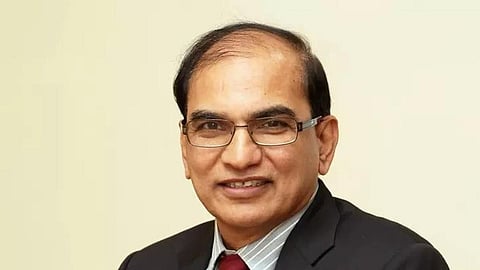
“We see a lot of startups in healthcare, and we see many failures. People want to build a technology and then fit it into healthcare. It doesn’t work like that. In healthcare, we are dealing with sick patients. Predictable outcomes matter,” begins Dr Ravindranath Kancherla, founder of Global HealthX.
Pulse 2026, he explains, is designed to pull innovation back to first principles. Over the past two years, Global HealthX has incubated multiple startups across healthcare, life sciences and health technologies — supporting them with technology, go-to-market strategies and direct investment. This event is an opportunity to showcase that work while sending a clear message to young founders: healthcare innovation begins with pain points, not platforms.
He shares, “The problem must be solved for the patient first, then for the doctor and the hospital. If hospitals don’t see efficiency or value — especially in the private sector — they will not work with startups. Market fitment is very, very important, and it has to be figured out early.”
That emphasis on early validation defines the Global HealthX approach. Even at the proof-of-concept (POC) stage, startups are expected to work closely with subject matter specialists, hospital administrators and clinicians. He explains, “A POC has to show impact for the patient, the doctor and the hospital. Otherwise, you are already too far into the product.”
At Pulse 2026, attendees will see startups across remote care, augmented intelligence, healthcare data platforms and bionics — each selected for its direct relevance to healthcare delivery. Dr Ravindranath points to solutions in mental health that focus on early detection of stress and anxiety among students and employees, along with pain management programs using augmented and mixed reality. Other innovations include point-of-care diagnostics addressing needs from primary to tertiary care. He notes, “These products have a serious impact on healthcare. We want founders to understand that healthcare is not like any other sector. It is about solving the problems of humanity.”
Beyond pitches, Pulse 2026 places strong emphasis on direct access to ecosystem leaders. For Dr Kancherla, mentorship is not a side benefit — it is essential. He explains, “Healthcare leaders and subject matter specialists see the delivery issues every day. Interacting with them gives founders insight into difficult areas, real constraints and real opportunities.”
Alongside him, healthcare investors, doctors and administrators will participate, creating what he describes as a complete ecosystem for learning and collaboration. He states, “This is the right environment for people who want to innovate seriously in healthcare.”
When it comes to investment, Global HealthX follows a tightly defined thesis. He says, “The criteria is simple: Does it make an impact and reduce the cost of healthcare without compromising safety and quality?”
Accessibility remains central to that vision. Products that expand primary and secondary care, reduce hospital stays, or serve larger populations receive strong consideration. “Every extra day a patient stays in a hospital increases cost. If recovery is faster, healthcare becomes more affordable,” he points out.
Future readiness is equally important. “AI and robotics will play a very important role in healthcare in the coming years,” he highlights, adding that sustainability in this evolving landscape is critical. Global HealthX is also actively interested in life sciences, including drug discovery, biopharmaceuticals, longevity, health span, genomics, metabolomics and proteomics.
Pulse 2026 also signals what comes next. Dr Ravindranath outlines plans for a nonprofit university integrating health sciences, life sciences and technology under one roof. Global HealthX will serve as the incubator and accelerator within this ecosystem, supported by advanced labs, validation centres and large healthcare datasets.
“The larger question is simple. How do we democratise healthcare in India? Today, only 10 to 20 percent of the population can afford corporate healthcare. Without reducing costs and improving access, we cannot call ourselves a developed nation,” he concludes.