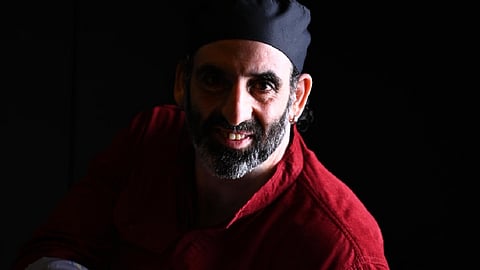

Kashmiri cuisine does not arrive quietly. It carries centuries of ritual, migration, memory and meticulous technique in every ladle of yoghurt gravy and every hand-pounded morsel of meat. At the Hyderabad Marriott Hotel & Convention Centre, Chef Rahul Wali’s ten-day festival, The Feast of Paradise, is not just a showcase of dishes — it is a structured introduction to the ceremonial grammar of wazwan and the refined restraint of Kashmiri Pandit cooking, presented through thoughtfully curated vegetarian and non-vegetarian thalis.
Chef Rahul Wali shares, “I’m presenting Kashmiri food — both wazwan and a couple of dishes from pandit cuisine. We’ve created structured set menus so people can understand and truly relish the cuisine of Kashmir.”
The non-vegetarian thali is rooted firmly in wazwan tradition — a celebratory, multi-course feast historically associated with Kashmiri Muslim culture. It begins with Tabakhmaaz, mutton ribs slow-stewed and then fried in ghee until crisp at the edges, rich yet balanced. The Seekh Kebab is delicately spiced and tandoor-cooked, while Kokur Kanti offers chicken cubes tossed with Kashmiri spices, onion and tomato — robust, but never overwhelmingly fiery.
In the mains, technique takes centre stage. Goshtaba, often considered the ceremonial finale of a wazwan, features finely hand-pounded mutton dumplings simmered in a smooth yoghurt-based gravy. The texture is velvety, the flavour layered with fennel and dry ginger. Rogan Josh arrives in its signature deep red hue — slow-cooked mutton enriched by Kashmiri chillies that lend colour more than heat. Meethi Maaz, tender boneless mutton with fenugreek, introduces gentle bitterness and warmth, while Waaz Gaad, a tangy fish preparation, adds contrast. The regional Rajma from Bhadarwah is earthy and comforting.
Rice is integral to the experience. Saffron Rice is fragrant with ghee, while Maaz Pulao layers mutton chunks with aromatic spices and nuts. Saffron Naan accompanies the spread. The meal concludes with Kong Phirin, a delicate semolina and milk pudding, and Shufta, slow-cooked dry fruits lightly spiced and sweetened.

“For Hyderabad, we’ve kept the flavours subtle,” Chef Rahul explains, adding, “The cuisine itself is subtle. We haven’t tried to make anything overly bold. But yes, it has good variety and, especially for non-vegetarians, there is a generous presence of meat.”
The vegetarian thali reflects the same regional discipline. Starters such as Nadur Kebab — crisp lotus stem and potato cakes — highlight texture, while Mushroom Kanti carries aromatic spices in a lighter format. Buzith Chaaman, grilled paneer marinated in Kashmiri spices, is smoky and firm.
The mains remain faithful to Pandit culinary philosophy. Meethi Chaaman pairs paneer with fenugreek in a gently spiced gravy. Dum Oluv features potatoes in a Kashmiri red chilli-based curry that is vibrant but balanced. Nadir Yakhni, lotus stem in a yoghurt-based curry, exemplifies the restrained spice architecture of Pandit cuisine. “Pandit cuisine does not use onion, garlic or tomato,” Chef Rahul notes, adding, “Whereas wazwan uses coriander powder, garam masala and a lot of garlic. That’s where the difference in flavour comes.”
He traces wazwan’s evolution to historical influences. “When the Mughals came to Kashmir in the 15th century, they incorporated their ingredients into the local food and created what became wazwan cuisine. It’s more of a celebratory cuisine; not something eaten every day.”
Even the accompaniments tell a story. The mint chutney here is made from sun-dried mint ground into powder. “It’s not the regular green chutney you find everywhere,” he says, further adding, “We sun-dry the mint ourselves and then make the chutney.”
Having cooked extensively in Hyderabad, Chef Rahul recognises a natural resonance. “Fortunately for me, it’s a meat-loving city. The flavours are different from Hyderabadi cuisine, but because there is good meat and distinctive spices, people connect with it,” he smiles.
The Feast of Paradise succeeds not by dramatics but by discipline, offering Hyderabad a structured, ceremonial taste of Kashmir. The dinner-only festival at Hyderabad Marriott Hotel & Convention Centre is available till March 1.