
As International Women’s Day draws near, the spotlight turns to women who are not just entering spaces once dominated by men, but steadily transforming them. From the driver’s seat to the writer’s room, from the stage to the streets, women across fields are challenging old stereotypes and redefining what leadership, courage and success look like. This Women’s Day on March 8, CE speaks to women who have chosen the road less travelled — stepping into professions where representation was once scarce and expectations were often stacked against them.
Fearless beneath waves
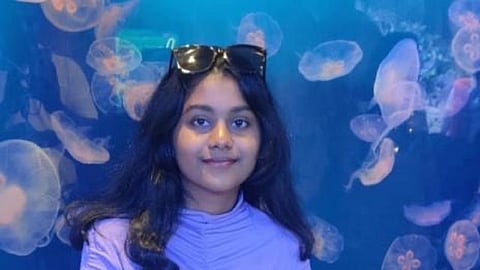
My journey as a scuba diver began with curiosity but soon grew into something far more meaningful. With each certification — from Professional Association of Diving Instructors Advanced Open Water Diver to Coral Reef Conservation — I realised diving is not just about exploring breathtaking underwater landscapes, but also about understanding fragile ecosystems and recognising our responsibility to protect them. One of the biggest challenges was learning to stay calm in unfamiliar environments. The ocean demands focus and control. Mastering buoyancy, managing air consumption and staying aware of marine life required discipline and patience, while also strengthening my confidence and problem-solving skills. Seeing coral bleaching and damaged reefs firsthand reshaped how I view conservation, pushing me beyond recreational diving toward advocacy. Looking ahead, I hope to combine my interests in STEM and marine conservation, become a certified Shark Conservation Diver, and contribute to sustainable ocean protection.
– Ashrita Gachumale, 16-year-old PADI AmbassaDiver and high school student

Her lens, her story
When I wrote my first film, Manamantha, I barely knew the grammar or fundamentals of screenwriting. What I had were fresh ideas and the guidance of my mentor, Chandra Sekhar Yeleti. It was while writing my second film, Mahanati, that I truly gained confidence and decided to commit to this path. In fact, I had promised myself that if Mahanati did not work, I would switch careers. The biggest lesson was simple: don’t compete with other writers or imitate established styles. Find your own voice and choose stories that genuinely resonate with you. Working in writers’ rooms can sometimes feel isolating. There are moments when I point out problematic or morally troubling elements in a scene and the men around me don’t immediately recognise the toxic implications. Instead of arguing, I ask questions that make them reflect. It can be frustrating, but cinema today cannot afford regressive storytelling, and audiences are increasingly questioning harmful narratives. Women are still vastly outnumbered behind the camera. For now, simply increasing our presence is a victory. Our stories must be told. From childhood, women often hear ‘that’s not for you’, but the only way forward is to ignore the noise and pursue what truly calls to you.
– Padmavati, filmmaker
Breaking business barriers
For me, it wasn’t one dramatic moment, but a gradual realisation. When I started building my F&B business, I entered the industry without a traditional hospitality background. Most of the teams I worked with, especially the chefs and kitchen staff, were men, and initially it wasn’t easy for them to understand or trust a woman leading the vision of the brand. I had to show that I could build something meaningful while offering stability and growth to the people working with me. Over time, as the brand evolved and the team began to believe in that vision, it gave me the confidence that this was exactly where I belonged. Confidence, for me, came from learning on the job and being closely involved in every part of the business. Since I didn’t come from a traditional hospitality background, I spent time understanding the kitchen, the operations, and the people who make the business run every day. When your team sees that you are consistent, committed and clear about your vision, credibility builds naturally. I also learned that leadership doesn’t always have to be loud; sometimes it’s simply about being steady and trusting your instincts. I do think the definition of success is evolving. Earlier, it was often measured through titles, scale or visibility. Today, many women define success through creativity, impact and personal fulfilment, bringing their own perspectives and leadership styles into the space. My message is simple: don’t wait for spaces to feel ready for you. Step into them anyway.
– Shilpa Datla, entrepreneur
Women on wheels
Motorcycling began as a simple hobby for me. Weekend rides within the city felt exciting yet ordinary — riding on Sundays, discovering new corners and enjoying the quiet freedom of the road. Yet somewhere in the back of my mind, a question lingered: why were there so few women riders? The moment that shifted my thinking came during a journey from India to Vietnam. At the Myanmar–Thailand border, we saw two women in their mid-forties working as bike taxi drivers and delivery partners, standing confidently beside their scooters, ready for work. It wasn’t a campaign or poster — just two women doing their job. In countries like Thailand, women riders were common, but in India it was still rare. I realised there was hardly any ecosystem or pathway for women who wanted to explore mobility this way. Soon after, I conceptualised and led a 56-day cross-country motorcycle expedition from Hyderabad, something I had never attempted before. The experience made me realise that if I could invest so much time and persistence into a passion, perhaps I could pursue it as a larger purpose. That led to the initiative I founded, Mowo Fleet, focuses on training women in mobility and driving skills. For the past seven years, we have worked to build our own path in a space where social perceptions, safety concerns and family expectations often discourage women from driving. Yet 99.5% of women who enrolled, complete the training and continue driving. In 2022, we trained women auto drivers in the Charminar area, and today they confidently navigate those streets. We have also partnered with the Society for Elimination of Rural Poverty to train 100 women bus drivers in Telangana — a first-of-its-kind initiative. This Women’s Day, my message is simple: no profession belongs to a particular gender — the real question is whether we are willing to learn.
– Jai Bharathi Addepalli, motorcyclist and CEO/Founder at Mowo Fleet
Her sweet triumph
I never really believed that cafés or restaurants are male-dominated spaces because, for me, it simply began with a craving. When I was pregnant, I suddenly wanted a Cassata ice cream and dragged my husband out at midnight to get one. When I tasted it, I realised it was not what I wanted at all — just cake and layered ice cream — and the craving stayed. My husband jokingly asked where we would get the best one, and I said I could make it myself, even though I knew nothing about baking. That challenge stayed in my mind, so I began googling recipes and experimenting at home. In two days, I finally cracked it with a small oven, layering ice cream on top. My craving ended there, but something else began. A friend tasted it and was shocked that I had made it myself, and slowly I began sending these ice cream cakes to family and friends while I was still working. Soon people insisted on paying, and that is how it spread, even reaching stores. Later, my husband suggested opening a small outlet, and that idea slowly turned into Cravery Cafe. For me, the mantra has always been simple: customer satisfaction, quality and employee happiness. I always say confidence is everything, but there is a thin line between confidence and overconfidence.
– Priya Vasireddy, restaurateur
Bold Jokes, Bolder Woman
My first open mic in the United States was in front of a room filled with people from every background. I said something quite dark on stage and the room burst into laughter. That moment stayed with me because it reminded me that laughter is perhaps the least racist reaction of all; it doesn’t care about gender or background, it simply responds to truth. Stand-up comedy still has far more men than women, and when a woman walks on stage, audiences often expect something ‘safe’ or ‘sweet.’ I address that right away: “I might look sweet, like the sister next door, but my jokes are a bit ‘A certificate’.” The laughter comes instantly. That’s when I realised I truly belonged here - when I stopped trying to be likable and started being honest. I built my voice through dark humour, uncomfortable observations and emotional misdirection. Confidence on stage isn’t about volume — it comes from owning silence. In the Telugu stand-up scene, I’m currently the only female comic with around 90,000 followers, mostly Gen Z men. People often say many things about women in comedy — including the old claim that women cannot be funny. My response is simple: try me. This Women’s Day, my message is simple: Stay dangerous. Stay uncomfortable. Stay you.
– Sravanthi Basa, stand-up comedian