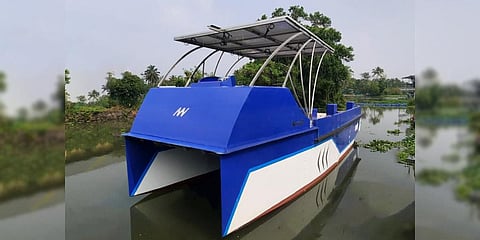

KOCHI: Srav, a solar offshore fishing vessel designed and developed by Kochi-based NavAlt Solar and Electric Boats, has bagged the iconic Gustave Trouve Award to become the world's first sea-going solar fishing vessel.
The prestigious awards were instituted in memory of Gustave Trouve, the famous French inventor, electrical engineer, physicist, and polymath. The Electric Boat Award - Commercial ferry category was dominated by nominations from some of the largest boat builders from across 30 nations.
A total of four vessels contested from India, of which three belonged to NavAlt. Srav was adjudged the 'Best Electric Work Boat" in the world, a release said here.
This is the second time that NavAlt is winning the global award. Earlier, NavAlt’s 75-seater solar-powered ferry Aditya which operates in the Vaikom-Thavanakadavu route had bagged the Gustave award in 2020.
Sandith Thandassery, founder and CEO, of NavAlt said that Srav is made in the seagoing vessel series from the company which will encompass all types of small and large fishing vessels, all powered by the Sun.
The tale of electric Srav began with NavAlt's dream of cleaner and quieter oceans. "Beginning from Aditya, a technology and design wonder, we went into building ROROs, luxury vessels, and military boats," Sandith said.
While the company was focused on putting diverse green vessels all across India, the Shell Foundation, one of the biggest cleantech advocates today, came with unflinching support, he said. The Shell found that solar fishing boats could create a huge impact on the fishing community of the country.
Surveys indicated that there are close to 250,000 fishing vessels operating on petrol and kerosene. Millions of people that depend on the sea and its produce count on these boats for offshore fishing - both in its physical structure as well as its unit economics.
The rising price of fossil fuels is a big concern for the community as they operate on very low margins from the catch that they receive minus the tantalizing fuel costs.
"Srav is a fascinating beast to ride on. It can host up to six fishermen. It has a 50-km range and is ideal for small fishers. The energy bill would be less than Rs 10,000, while fossil fuels would cost roughly Rs 3 lakh. Wear and tear too will be much less," Sandith said. "All the more, the Srav is super stable and super quiet," he added.
The Shell Foundation is backing NavAlt to introduce the sun-powered water beasts into the fishermen's community, forever ridding them of the fuel cost burden and at the same time introducing them to the newest form of fishing.
NavAlt will be deploying many Sravs across the west coast of India enabling the fishing community to greatly benefit from the "cut down" in operational expenses.
