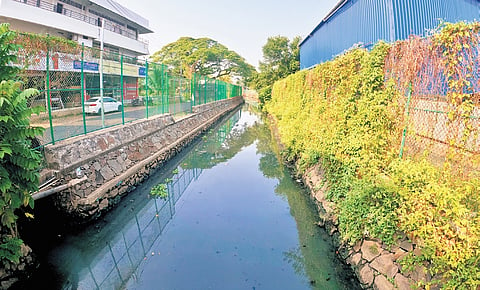

KOCHI: Experts have recommended the implementation of global initiatives to rejuvenate canals and drains in Kochi and tackle issues like waterlogging, the mosquito menace and spread of communicable diseases.
A meeting of health experts and representatives from the World Bank on Sunday discussed possibilities to clean up the canals in the city. “The condition of Market Canal, which is lined by street vendors selling vegetables and fruits, is miserable. It poses a public health threat and contributes to the mosquito menace. We need to implement intensive projects to clean the canal,” said Dr George Joseph Themplangad, a city-based public-health activist who attended the meeting.
The city has six major canals: Edappally, Chilavannoor, Thevara, Perandoor, Market, and Konthuruthy.
A report prepared by the Nature-Based Infrastructure Global Resource Centre on canal restoration in Kochi last year said that a hybrid approach, which includes restoring canals, constructing floating wetlands, planting mangroves, and creating biodiversity parks, would prove to be more effective in restoring canals. The study also urged the scaling up of restoration work.
Meanwhile, mayor M Anilkumar said initiatives to clean the canals are already in place. “We are planning to complete pre-monsoon cleaning activity by March or April,” he said, adding that machines have been introduced to remove aquatic weeds. “Work in many areas has been completed. The aim is to prevent waterlogging and other public-health issues,” he emphasised.
Padmaja S Menon, the corporation councillor who attended the meeting, called for the implementation for additional projects, beyond the canal-rejuvenation activities that are carried out ahead of monsoons. “We have concerns about the condition of the canals. We need to implement more intensive projects,” she said.
Anilkumar stressed on the need for behavioural change. “Cleaning the canals and drains is not a permanent solution. Households and restaurants will continue to dump waste in them. The public should also cooperate to bring about change,” he said.
Padmaja echoed the views. Dr George pointed out that discussions with global experts and the implementation of global models to clean the canal can help. “We need to test the quality of water.
Also, if better projects are implemented and the canals are well maintained, we can even use them for revenue generation. The local bodies, district administration and other authorities should look into such possibilities,” he added.
